Introduction
Shuffling a tarot deck for the first time can feel both exhilarating and overwhelming. Where do you place the cards? How many should you draw? What questions should you ask? These uncertainties stop many aspiring readers before they even begin their journey into this ancient practice of self-reflection and guidance.
A tarot spread is simply a structured layout of cards, where each position holds specific meaning and context for your reading. Think of it as a framework that transforms random cards into a coherent narrative—much like how a recipe turns individual ingredients into a delicious meal. Every Tarot Reader relies on these structured layouts to provide focused guidance, using the arrangement itself to direct interpretation and reveal meaningful patterns among the symbols and archetypes present.
Starting with beginner tarot spreads easy to learn is crucial for building your confidence and developing intuitive skills without feeling lost in complexity. A one-card or three-card layout allows you to practice interpreting individual cards and their relationships before tackling elaborate ten-card arrangements. This foundation prevents overwhelm and helps you internalize the card meanings organically.
This guide presents five beginner-friendly tarot spreads that are easy to learn, each with step-by-step instructions to help you conduct meaningful readings from day one.
1. One-Card Daily Draw: The Simplest Starting Point
The one-card daily draw is the perfect entry point for anyone beginning their tarot journey. This straightforward practice removes the complexity of multi-card spreads while building essential skills that every reader needs. In fact, professional Tarot Readers frequently recommend this single-card practice to beginners because it develops the fundamental ability to connect with card meanings without becoming overwhelmed by multiple positions and interactions.
To perform your daily draw, shuffle your deck while clearing your mind. Focus on a simple intention—perhaps asking for guidance about the day ahead. Draw one card and place it face-up before you. This single card becomes your focal point for reflection and interpretation.
The beauty of this practice lies in its flexibility. You might ask, "What energy should I focus on today?" or "What lesson is available to me right now?" These open-ended questions invite meaningful insights without creating pressure for perfect interpretations.
As you examine your card, notice the imagery, colors, and symbols. Consider how they relate to your current circumstances. An experienced Tarot Reader interprets these visual elements by connecting symbolic meanings to real-life situations—when drawing The Sun, they might see encouragement for optimism during a challenging project, while The Tower could signal necessary changes that have been avoided. This skill of relating symbols to circumstances develops naturally with consistent practice.
For those wanting immediate guidance, try a one card draw to experience this foundational practice firsthand. Daily repetition transforms unfamiliar cards into trusted companions.
2. Three-Card Past-Present-Future Spread
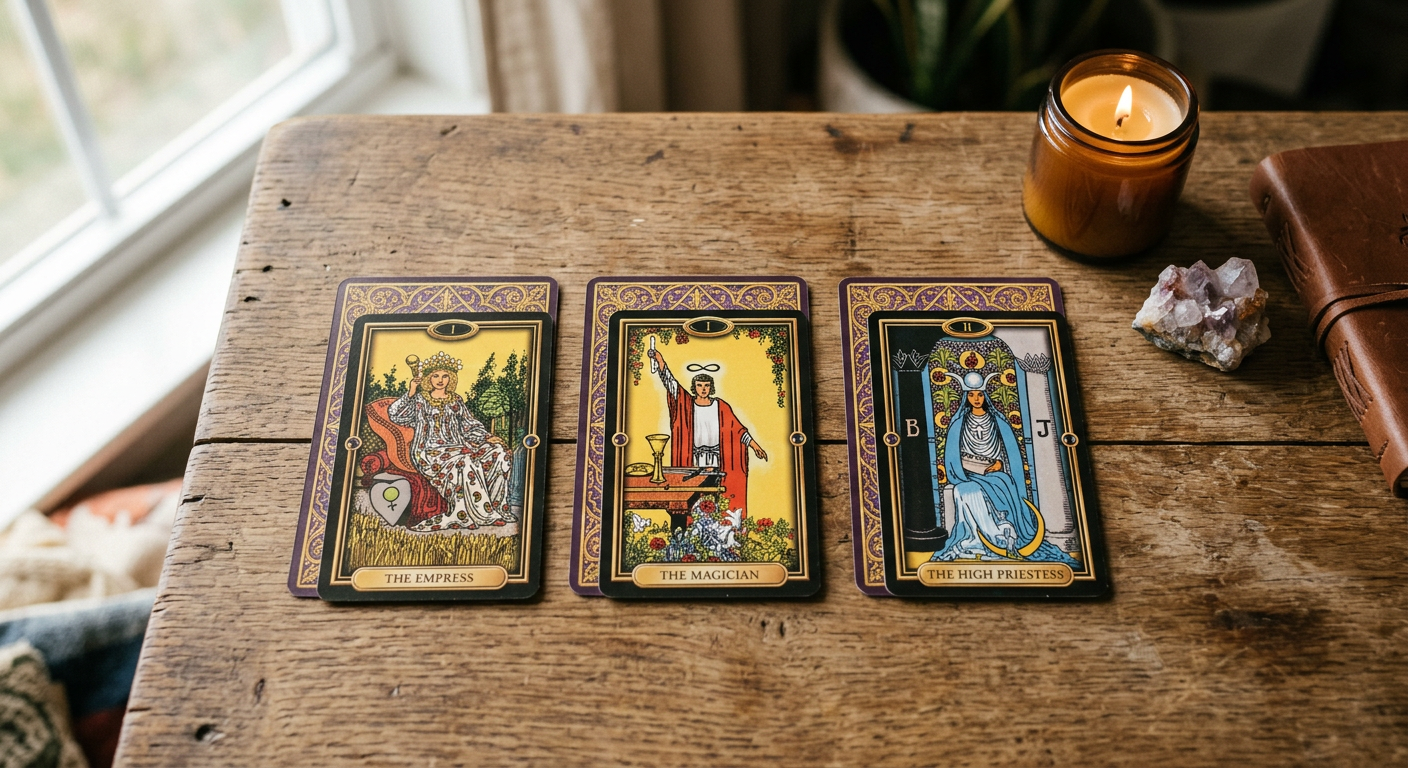
The Three-Card Past-Present-Future spread is the most popular layout for beginners, offering a straightforward way to understand how events connect through time. This simple yet powerful spread uses three cards placed horizontally from left to right.
Position 1 (Left) - Past: This card reveals the foundation or root cause of your current situation. It shows what experiences, decisions, or influences have led you to where you are now.
Position 2 (Center) - Present: The middle card represents your current circumstances and the energy surrounding you right now. It reflects the immediate situation you're navigating.
Position 3 (Right) - Future: This card indicates the likely outcome if you continue on your current path. It's not set in stone but shows the trajectory based on present conditions.
Sample Interpretation: Imagine drawing the Five of Pentacles (past), Three of Swords (present), and The Star (future). This narrative shows financial hardship leading to current heartbreak, but hope and healing approaching. Each card builds upon the previous one, creating a coherent story that helps you understand cause-and-effect relationships. Practice this spread using a three card spread reading to develop your interpretation skills.
3. Three-Card Situation-Action-Outcome Spread
While the past-present-future spread explores timeline progression, the Situation-Action-Outcome spread transforms three cards into a powerful decision-making tool. This action-oriented layout helps you navigate choices by clarifying where you stand, what steps to take, and what results to expect.
Position 1: Current Situation reveals the present circumstances surrounding your question, including hidden factors you might not consciously recognize. Position 2: Recommended Action suggests the most beneficial approach or mindset to adopt. Position 3: Likely Outcome shows the probable result if you follow the recommended path.
This spread excels for career crossroads—should you accept that job offer or stay put? For relationship choices—is it time to have that difficult conversation? For personal development questions—which skill should you prioritize learning?
The beauty lies in its practicality. Unlike predictive spreads, this format empowers you with agency. You're not passively receiving a forecast; you're actively exploring how your choices shape your future. Try the Decision Making Spread for an expanded version of this action-focused approach.
4. Five-Card Cross Spread for Deeper Insight
Once you've mastered simpler layouts, the Five-Card Cross Spread offers meaningful depth without overwhelming complexity. This formation uses a center card surrounded by four additional positions, creating a cross pattern that reveals multiple dimensions of your question.
Layout Structure:
Place one card in the center representing the heart of the matter—your core issue or question. Position four cards around it: one above (future trajectory), one below (past influences), one to the left (present situation), and one to the right (advice or external influences).
Reading the Positions:
The center card anchors your interpretation, while surrounding cards provide context. Past influences show what led to this moment, present situation reveals current energies, future trajectory indicates where things are heading, and advice offers guidance for navigation.
Synthesizing Your Reading:
Connect the cards by identifying themes and relationships between positions. Notice how past influences shape the present, or how advice cards might address challenges revealed in other positions. Practice with free AI tarot readings to develop your narrative skills before working with physical cards.
5. Practical Tips for Choosing and Using Spreads
Selecting the right spread begins with understanding your question's complexity. Simple yes/no inquiries work best with single-card draws, while nuanced life decisions benefit from multi-card layouts like the Three Card Spread. Match the spread's depth to your question's scope—using a ten-card Celtic Cross for "What should I eat for lunch?" wastes energy and creates confusion.
Before any reading, establish a preparation ritual. Clear your physical space of distractions, ground yourself through deep breathing or meditation, and formulate a specific intention. Vague questions like "Tell me about love" produce scattered interpretations, whereas "What energy should I bring to new relationships?" yields focused guidance.
Avoid common pitfalls that undermine accuracy. Reading while emotionally charged about an outcome clouds objectivity—wait until you've achieved mental clarity. Never ask leading questions that seek validation rather than insight. Resist reading repeatedly on the same topic within short timeframes; this creates confusion rather than clarity. Finally, don't ignore reversed cards—they offer crucial nuance and balance to upright meanings, deepening your interpretative skills as you progress.
Conclusion
Every expert tarot reader you admire started exactly where you are now—shuffling their first deck and learning these same beginner tarot spreads easy learn methods. The difference between them and someone who gave up wasn't talent or natural psychic ability; it was consistent practice and patience with the learning process.
Your intuition is like a muscle that strengthens with regular use. Start by committing to seven consecutive days of one-card draws each morning. This simple practice builds momentum and creates a foundation for more complex spreads. Keep a dedicated tarot journal where you record the card pulled, your initial interpretation, and what actually unfolded that day. Within weeks, you'll notice patterns emerging and your confidence growing.
The three-card spread becomes more nuanced, the Celtic Cross reveals deeper layers, and suddenly those cards that once confused you now speak clearly. Begin your journey today—pull your first card right now and write down whatever impressions come to mind, no matter how uncertain they feel.