Introduction
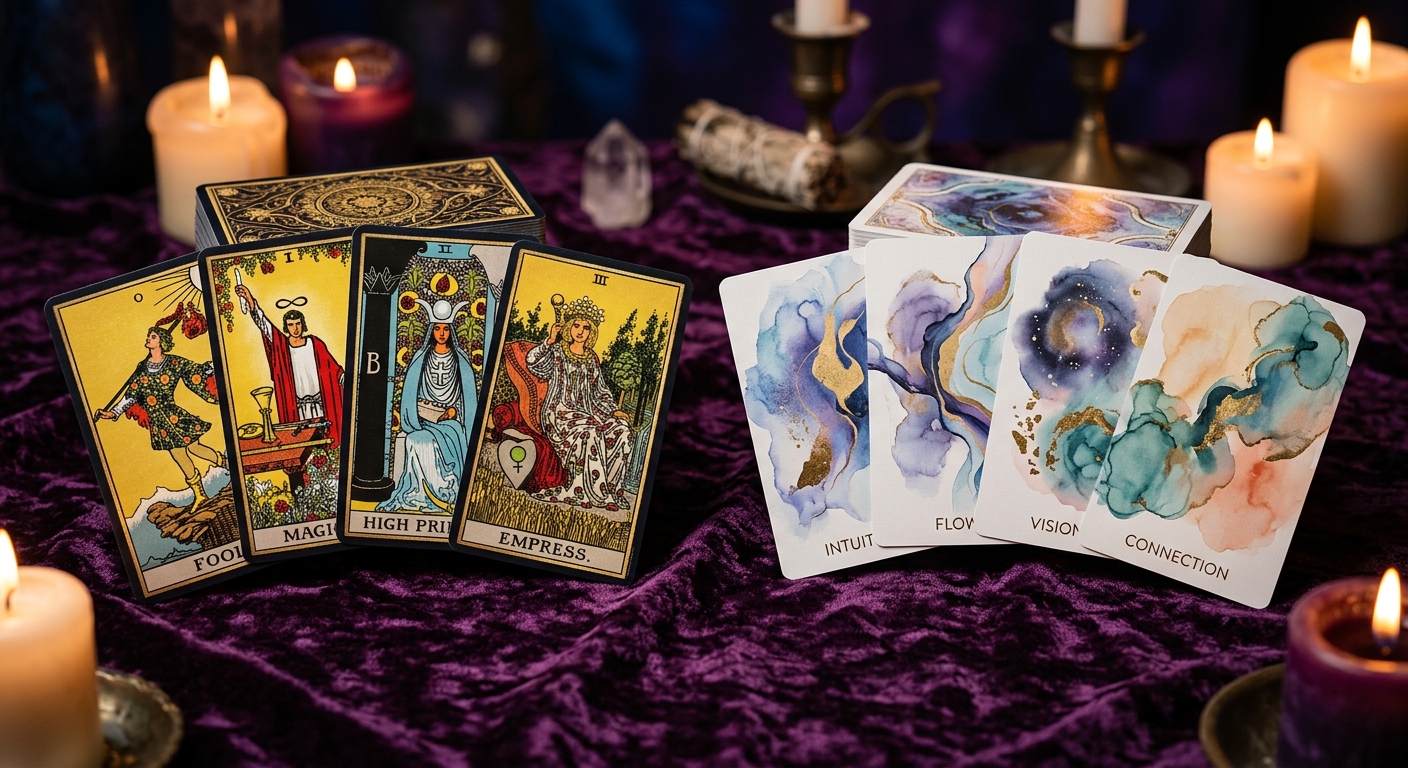
Picture yourself standing in a metaphysical shop, surrounded by dozens of beautifully illustrated card decks. Some boxes promise "oracle guidance," while others display intricate "tarot" imagery. You reach for both, wondering—what's actually the difference?
You're not alone in this confusion. As spiritual practices surge in popularity, with over 2 million tarot-related searches monthly, both oracle and tarot cards have become mainstream tools for self-reflection and guidance. Many beginners assume these terms are interchangeable, but understanding the difference between oracle cards and tarot is essential—they're fundamentally distinct divination systems. Resources like Tarot Reader have emerged to help newcomers explore each practice's unique characteristics.
While both oracle and tarot cards serve as powerful instruments for insight and introspection, they operate under completely different structures. Tarot follows a rigid 78-card framework with specific meanings, whereas oracle decks embrace creative freedom with varying card counts and themes.
This guide will clarify the key difference between oracle cards and tarot—from their historical origins and structural differences to their practical applications—helping you choose the right divination tool for your spiritual journey.
Structural Differences: Deck Composition and Organization
Structural comparison between tarot and oracle card decks including card count, organization system, and standardization
| Feature | Tarot Cards | Oracle Cards |
|---|---|---|
| Number of Cards | 78 cards (fixed) | Varies widely (typically 36-64 cards) |
| Deck Structure | 22 Major Arcana, 56 Minor Arcana | No fixed structure, creator-determined |
| Standardization | Highly standardized across decks | No standardization, unique to each deck |
| Suit System | Four suits: Wands, Cups, Swords, Pentacles | No traditional suits, thematic groupings if any |
| Card Categories | Major and Minor Arcana, Court cards | Theme-based categories, varies by deck |
Tarot follows a standardized 78-card structure: 22 Major Arcana cards representing life's significant spiritual lessons and 56 Minor Arcana cards divided into four suits (Wands, Cups, Swords, Pentacles). Each suit contains 14 cards—10 numbered cards plus four court cards. This rigid framework ensures consistency across all tarot decks, from the classic Rider-Waite-Smith to modern interpretations. Platforms like Tarot Reader help users understand these standardized structures by providing detailed explanations of how each card connects within the larger framework, making the learning process more accessible for beginners.
Oracle decks vary dramatically, ranging from 36 to over 100 cards with no fixed organization. Creators structure them entirely around specific themes—angels, animals, goddesses, chakras, or affirmations. One oracle deck might contain 44 cards focused on moon phases, while another features 52 cards exploring different archetypes. This creative freedom allows oracle deck designers to craft unique systems that don't require adherence to traditional symbolism or hierarchical structures.
Reading Methodology: Traditional Spreads vs Intuitive Approaches
Tarot readings follow structured methodologies with established spreads that have been refined over centuries. The Celtic Cross, for instance, assigns specific meanings to each of its ten positions—covering past influences, present challenges, future outcomes, and subconscious factors. Each card placement creates a narrative framework, and reversed cards introduce nuanced interpretations that can indicate blocked energy or inverted meanings.
Oracle cards take a dramatically different approach. Without standardized spreads or reversal meanings, oracle readings rely primarily on intuitive connection. Readers create custom layouts based on their questions, pulling cards in free-form patterns that feel right in the moment. This flexibility makes oracle cards immediately accessible to beginners who might find tarot's analytical structure intimidating.
Tarot's systematic framework appeals to those seeking detailed, multi-layered insights through positional relationships and card combinations. Oracle's straightforward interpretations deliver quick, direct guidance without requiring extensive study of traditional meanings or complex spread structures.
Historical Origins and Cultural Evolution
Tarot emerged in 15th-century Italy as a card game called "tarocchi," enjoyed by European nobility for entertainment rather than divination. These early decks featured the familiar structure of 78 cards—22 Major Arcana and 56 Minor Arcana—that remains standard today. The mystical transformation occurred in the 18th century when French occultist Antoine Court de Gébelin claimed the cards contained ancient Egyptian wisdom, sparking widespread adoption for spiritual purposes.
Oracle cards lack a single historical lineage. While ancient civilizations used various divination tools—from Roman sortes to Chinese I Ching—modern oracle decks developed primarily in the 20th century as spiritual seekers created personalized systems. Unlike tarot's rigid structure, oracle decks vary widely in card count and themes.
Tarot's symbolic framework draws from Kabbalah's Tree of Life, astrological correspondences, and numerological principles, creating layers of interconnected meaning. Oracle cards embrace diverse philosophies—from angel guidance to animal totems—without standardized symbolism, offering creators and readers greater interpretive freedom.
Best Use Cases: When to Choose Each System
Choose tarot when you need comprehensive insights into complex situations. The structured 78-card system excels for analyzing relationship patterns, exploring career paths, and understanding multi-layered life transitions. Tarot's Major and Minor Arcana provide nuanced answers to questions like "What underlying patterns are affecting my relationship?" or "How can I navigate this career crossroads?"
Oracle cards shine for daily spiritual guidance and affirmations. Their straightforward messages work perfectly for morning intentions, quick yes/no questions, or when you need encouraging clarity. Ask oracle decks: "What energy should I embrace today?" or "What message do I need right now?"
Combining both systems creates powerful readings. Start with tarot for structured depth about your situation, then draw an oracle card for actionable guidance or affirmation. This hybrid approach delivers both analytical insight and intuitive encouragement in one session.
Learning Curve and Getting Started
Tarot presents a steeper learning curve, requiring dedicated study of 78 cards, each with layered meanings that shift based on suit associations, numerology, and position within spreads. Most beginners spend 3-6 months developing basic proficiency, learning to recognize patterns between Major and Minor Arcana while understanding how card relationships create nuanced interpretations.
Oracle cards offer immediate accessibility. Their guidebook meanings provide clear guidance from day one, making them ideal for beginners seeking instant connection. You can conduct meaningful readings within hours of opening your first deck.
Neither system requires innate psychic ability—both develop through consistent practice and trusting your interpretive instincts. Start with tarot by mastering one suit before expanding, or try free AI tarot readings to explore card meanings interactively. For oracle cards, choose a deck with artwork that resonates emotionally, then practice daily one-card draws to build confidence in your intuitive responses.
Conclusion
Understanding the difference between oracle cards and tarot ultimately reveals that neither system is inherently superior—they simply serve different purposes and resonate with different reading styles. Tarot offers structured depth through its 78-card framework and centuries of established symbolism, making it ideal for those seeking comprehensive readings and systematic skill development. Oracle cards provide intuitive flexibility with their freeform designs and varied themes, perfect for readers who value creative interpretation and immediate accessibility.
If you're just beginning your divination journey, consider starting with oracle cards for quick, encouraging insights, or dive into tarot for a more rigorous learning experience that builds foundational reading skills. The most rewarding approach is often experimenting with both systems to discover which resonates with your personal style.
Ready to experience tarot firsthand? Try our free AI tarot reading to begin exploring this ancient practice with modern convenience and personalized guidance.