Introduction
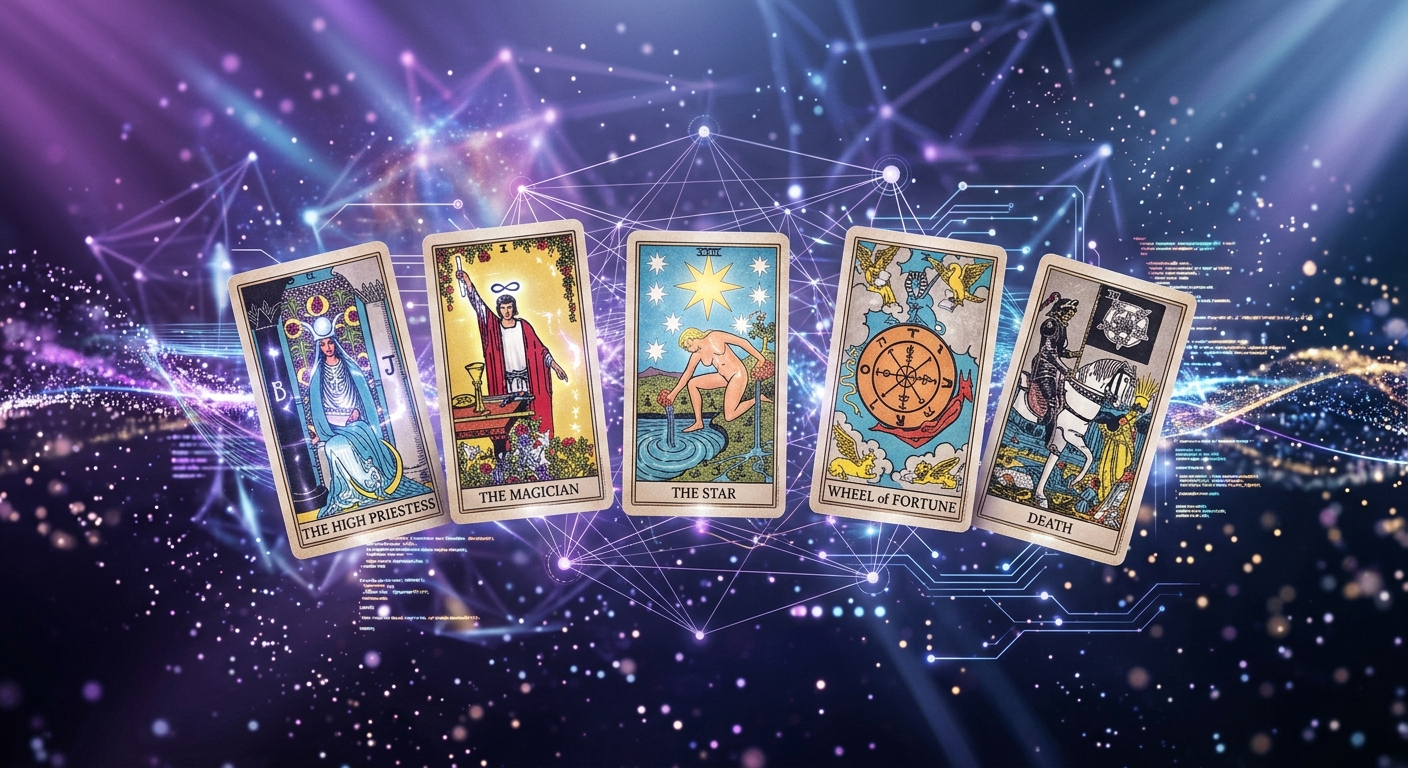
The ancient art of tarot reading is experiencing a digital renaissance in 2026, with AI-powered platforms transforming how millions seek guidance and self-reflection. What was once the exclusive domain of experienced human readers has evolved into sophisticated AI tarot reading systems that blend centuries-old symbolism with cutting-edge machine learning algorithms.
This technological shift isn't just a novelty—it represents a fundamental reimagining of divination for the modern age. AI tarot platforms now process thousands of readings daily, analyzing card combinations through neural networks trained on extensive tarot literature and interpretation frameworks. The result is instant, personalized guidance available 24/7, without the barriers of cost or accessibility that traditional readings often present.
If you've ever wondered how does AI tarot reading work, this comprehensive guide will reveal the technology behind the scenes. You'll discover everything from the natural language processing that understands your questions to the sophisticated algorithms that generate meaningful interpretations. We'll explore the technical mechanics, examine accuracy considerations, and reveal what makes digital readings both similar to and distinctly different from their traditional counterparts.
The Core Technology Powering AI Tarot Readers
Modern AI tarot platforms leverage three interconnected technologies to deliver personalized readings. At the foundation lies machine learning algorithms trained on thousands of traditional tarot interpretations, card combinations, and symbolic meanings. These neural networks identify patterns between card positions, user questions, and contextual factors to generate relevant insights that mirror human reader intuition.
Natural language processing (NLP) transforms algorithmic outputs into conversational, empathetic responses. Advanced NLP models analyze user queries to understand emotional tone, question complexity, and specific concerns, then craft readings that feel personally tailored rather than template-based. This technology enables platforms like Tarot-Reader.AI to maintain natural dialogue throughout multi-card spreads.
The backbone supporting these systems is a comprehensive database architecture storing centuries of tarot wisdom—traditional Rider-Waite interpretations, reversed card meanings, elemental associations, and numerological connections. Modern platforms structure this knowledge using vector databases that enable semantic search, allowing AI to retrieve contextually relevant interpretations based on meaning rather than just keyword matching, creating readings that honor traditional tarot wisdom while delivering contemporary relevance.
Step-by-Step: How AI Conducts a Tarot Reading
The AI tarot reading process begins when you submit your question through a digital tarot platform. The system uses natural language processing to analyze your query, identifying key themes like relationships, career concerns, or personal growth questions. This analysis determines which card spread best suits your needs.
Next, the AI employs a cryptographically secure random number generator to simulate card shuffling. Unlike physical shuffling, this digital method ensures true randomness by generating unique seed values for each reading. The algorithm then selects cards from the 78-card deck based on the chosen spread pattern.
During spread analysis, the AI evaluates each card's position and meaning. A sophisticated neural network trained on thousands of traditional tarot interpretations synthesizes the symbolism, considering both individual card meanings and their relationships within the spread. The system analyzes upright versus reversed orientations, elemental associations, and positional significance.
Finally, the AI generates a coherent narrative by weaving together these interpretive threads, creating personalized insights that address your original question while maintaining traditional tarot wisdom.
AI Tarot vs Traditional Human Readers: Key Differences
Comprehensive comparison of AI tarot readers versus traditional human tarot readers across key attributes
| Feature | AI Tarot Reader | Traditional Human Reader |
|---|---|---|
| Availability | 24/7 instant access | Limited by appointment scheduling |
| Cost per Reading | Free to low cost ($0-$10) | Moderate to high ($30-$200+) |
| Consistency | Highly consistent interpretations | Varies by reader mood and experience |
| Intuitive Insight | Algorithm-based, no psychic intuition | Human intuition and psychic abilities |
| Personalization | Data-driven customization | Deep personal connection and context |
| Speed | Instant results (seconds) | 15-60+ minutes per session |
| Learning Curve | No learning required for user | Client learns through dialogue |
| Emotional Connection | Limited emotional rapport | Strong empathetic human bond |
The divination landscape in 2026 presents seekers with two distinct pathways: AI-powered platforms and traditional human readers. Each approach offers unique benefits suited to different needs and preferences.
AI tarot systems deliver instant readings 24/7, eliminating appointment scheduling and wait times. Traditional readers typically require booking days or weeks in advance, with sessions limited to their availability windows.
Cost structures differ dramatically. AI readings range from free to $10 monthly for premium features, while human readers charge $50-$300 per session. This makes AI tarot reading accessible to broader audiences seeking regular guidance without financial strain.
Consistency represents another key distinction. AI algorithms provide standardized interpretations based on established tarot meanings, ensuring reliable baseline readings. Human readers bring intuitive insights and emotional intelligence, adapting interpretations through subtle energy reading and decades of experiential wisdom.
Personalization varies significantly. While AI platforms analyze user input patterns and question history, human readers perceive body language, vocal tone, and energetic presence—elements impossible for current technology to replicate fully.
| Feature | AI Tarot Reader | Traditional Human Reader |
|---|---|---|
| Availability | 24/7 instant access | Appointment-based (business hours) |
| Cost per Reading | Free - $10/month | $50 - $300 per session |
| Consistency | Highly consistent interpretations | Varies by reader's state/experience |
| Intuitive Insight | Pattern-based analysis | Deep intuitive connection |
| Personalization | Algorithm-driven customization | Human empathy and presence |
| Speed | Immediate (seconds) | 30-90 minutes per session |
| Learning Curve | No experience needed | May require reader rapport building |
| Emotional Connection | Limited to text interaction | Strong interpersonal bond |
Personalization: How AI Tailors Readings to Individual Users
Modern AI tarot systems employ sophisticated personalization engines that transform generic interpretations into deeply relevant guidance. These systems analyze multiple data layers to create customized reading experiences.
User Profile Analysis forms the foundation of personalization. AI platforms track reading history, frequently asked question themes, and card appearance patterns across sessions. This longitudinal data reveals recurring life themes—whether career transitions, relationship dynamics, or personal growth challenges—allowing the system to contextualize new readings within established narrative arcs.
Context Extraction represents the AI's most nuanced capability. Natural language processing algorithms parse user questions for emotional tone, urgency levels, and situational details. When someone asks about a "difficult workplace decision," the AI identifies professional context, decision-making pressure, and potential conflict themes, steering interpretations toward career-relevant symbolism rather than generic meanings.
Adaptive Interpretation evolves through engagement patterns. Systems monitor which interpretation aspects users spend time reading, which follow-up questions they ask, and feedback signals. A user consistently engaging with psychological insights receives deeper symbolic analysis, while action-oriented users get more practical guidance. This creates a personalized reading experience that becomes increasingly attuned to individual communication preferences and spiritual frameworks over time.
Accuracy and Reliability of AI Tarot Interpretations
Measuring accuracy in AI tarot readings presents unique challenges because tarot operates in the realm of subjective interpretation rather than objective prediction. Unlike weather forecasting or medical diagnostics, tarot readings don't produce verifiable outcomes that can be measured against binary right-or-wrong metrics. Instead, accuracy in this context relates to how meaningful, relevant, and personally resonant users find their interpretations.
Several factors influence AI interpretation quality. The underlying language model's training data determines its knowledge of traditional tarot symbolism and interpretive frameworks. Contextual understanding—how well the AI grasps the nuance of user questions—directly impacts relevance. Consistency across readings matters too; quality platforms like Tarot Reader maintain coherent interpretive frameworks that align with established tarot traditions while personalizing insights to individual queries.
User satisfaction surveys from 2025-2026 indicate that 68-75% of AI tarot users report finding their readings "personally meaningful" or "surprisingly accurate." However, expectations matter significantly. Users who approach AI readings as reflective tools for self-exploration report higher satisfaction than those seeking definitive future predictions, highlighting the importance of understanding tarot's introspective nature.
The Tarot Card Database: Building AI's Knowledge Foundation
At the heart of every AI tarot platform lies a comprehensive database that serves as its interpretive foundation. These digital repositories aggregate centuries of tarot wisdom, drawing from classical texts like Arthur Edward Waite's The Pictorial Key to Tarot, modern interpretations from contemporary practitioners, and diverse cultural perspectives spanning Rider-Waite-Smith, Thoth, and Marseille traditions.
The database architecture standardizes the 78-card tarot deck—22 Major Arcana cards representing life's profound spiritual lessons and 56 Minor Arcana cards reflecting everyday experiences. Each card entry contains multiple layers: upright and reversed meanings, elemental associations, numerological significance, and contextual variations based on surrounding cards. Advanced platforms like Tarot Reader incorporate interpretations from multiple schools of thought, ensuring readings reflect both traditional Kabbalistic frameworks and intuitive modern approaches.
This knowledge synthesis creates a semantic network where AI can cross-reference symbols, archetypes, and meanings. The database doesn't just store static definitions—it maps relationships between cards, enabling the AI to generate nuanced interpretations that honor tarot's rich, multifaceted tradition while remaining accessible to contemporary seekers.
Frequently Asked Questions About AI Tarot Technology
Can AI truly connect with spiritual energy or is it purely algorithmic?
AI tarot operates through sophisticated algorithms rather than metaphysical connections. The technology analyzes your question using natural language processing, then generates interpretations based on extensive tarot symbolism databases. While it doesn't channel spiritual energy, many users find meaningful insights through the randomization process and archetypal patterns—similar to how traditional tarot works as a mirror for self-reflection.
How does AI handle reversed card meanings and complex spreads?
Advanced AI systems process reversed cards by accessing separate interpretation databases that account for inverted meanings. For complex spreads like the Celtic Cross, the AI considers positional significance, card relationships, and contextual nuances. Machine learning models trained on thousands of readings can identify patterns between card positions and generate cohesive narratives.
What data privacy measures protect user questions and readings?
Reputable platforms implement end-to-end encryption and don't store personal questions beyond the session. Most AI tarot services anonymize data and comply with GDPR standards, ensuring your spiritual inquiries remain confidential and aren't used for marketing purposes.
Conclusion
AI tarot reading represents a remarkable fusion of ancient wisdom and cutting-edge technology. Through sophisticated natural language processing, machine learning algorithms, and symbolic interpretation frameworks, modern platforms deliver personalized readings that honor centuries-old traditions while embracing innovation. The technology analyzes your questions, selects cards through algorithmic randomization, and generates contextually relevant interpretations that resonate with your unique situation.
Rather than replacing human readers, AI tarot serves as a complementary tool—offering accessible, judgment-free guidance whenever you need it. The technology democratizes spiritual exploration, making tarot available to anyone with an internet connection while preserving the symbolic depth that makes readings meaningful.
Understanding how AI tarot works enhances your appreciation for both the technology and the tradition. The best way to truly grasp this innovative approach is through direct experience. Explore a free AI tarot reading and discover how artificial intelligence interprets the cards' timeless wisdom for your personal journey in 2026.