Introduction
In 2026, anxiety has become an increasingly common companion in our fast-paced, digitally connected world. If you're feeling overwhelmed, restless, or caught in cycles of worry, you're far from alone. As more people seek holistic approaches to emotional wellness, ancient practices like tarot reading for anxiety relief are experiencing a meaningful renaissance—not as mystical fortune-telling, but as powerful tools for self-reflection and mindfulness.
Tarot offers a unique framework for exploring your inner landscape, helping you externalize anxious thoughts and examine them from fresh perspectives. When used thoughtfully, tarot reading can complement your existing anxiety management strategies, providing moments of calm introspection and clarity. It's important to understand that tarot is a reflective practice, not a substitute for professional mental health care. Think of it as journaling with archetypal imagery—a creative method for processing emotions and gaining insight into your patterns and responses. For those just beginning their journey with tarot reading for anxiety relief, resources like Tarot Reader offer accessible entry points that remove barriers to starting a regular practice. This guide will show you how to integrate tarot into your wellness routine safely and effectively.
Understanding the Connection Between Tarot and Anxiety Relief
Tarot reading offers powerful anxiety relief through several psychological mechanisms that align with modern wellness practices. When you draw cards, you create a mindfulness pause—a deliberate interruption of racing thoughts that characterizes anxiety. This focused moment grounds you in the present, breaking the cycle of rumination that fuels worry.
The symbolic nature of tarot facilitates externalization, allowing you to project internal concerns onto archetypal images. Rather than wrestling with abstract fears, you engage with tangible symbols that give structure to overwhelming emotions. This narrative framework transforms chaotic anxiety into a story you can examine objectively.
The ritualistic elements—shuffling cards, arranging spreads, contemplating imagery—activate your body's relaxation response. These repetitive, intentional movements mirror meditation techniques proven to reduce cortisol levels. The practice becomes a mindful anchor that signals your nervous system to shift from fight-or-flight into rest-and-digest mode, creating measurable physiological calm alongside psychological clarity. Platforms like Tarot Reader help establish these mindfulness pauses through structured sessions designed specifically for anxiety relief, making it easier to create consistent rituals even when your mind feels scattered. Whether you're using physical cards or digital tools, the key is developing these anchoring moments as regular touchpoints in your day.
Best Tarot Spreads for Anxiety Relief in 2026
The 3-Card Anxiety Release Spread offers immediate insight into overwhelming feelings. Position 1 reveals your anxiety trigger—the root cause creating distress. Position 2 shows your current response pattern, highlighting whether you're resisting or avoiding the issue. Position 3 illuminates your path forward, offering actionable guidance for relief. Shuffle while focusing on your anxiety, then draw three cards left to right.
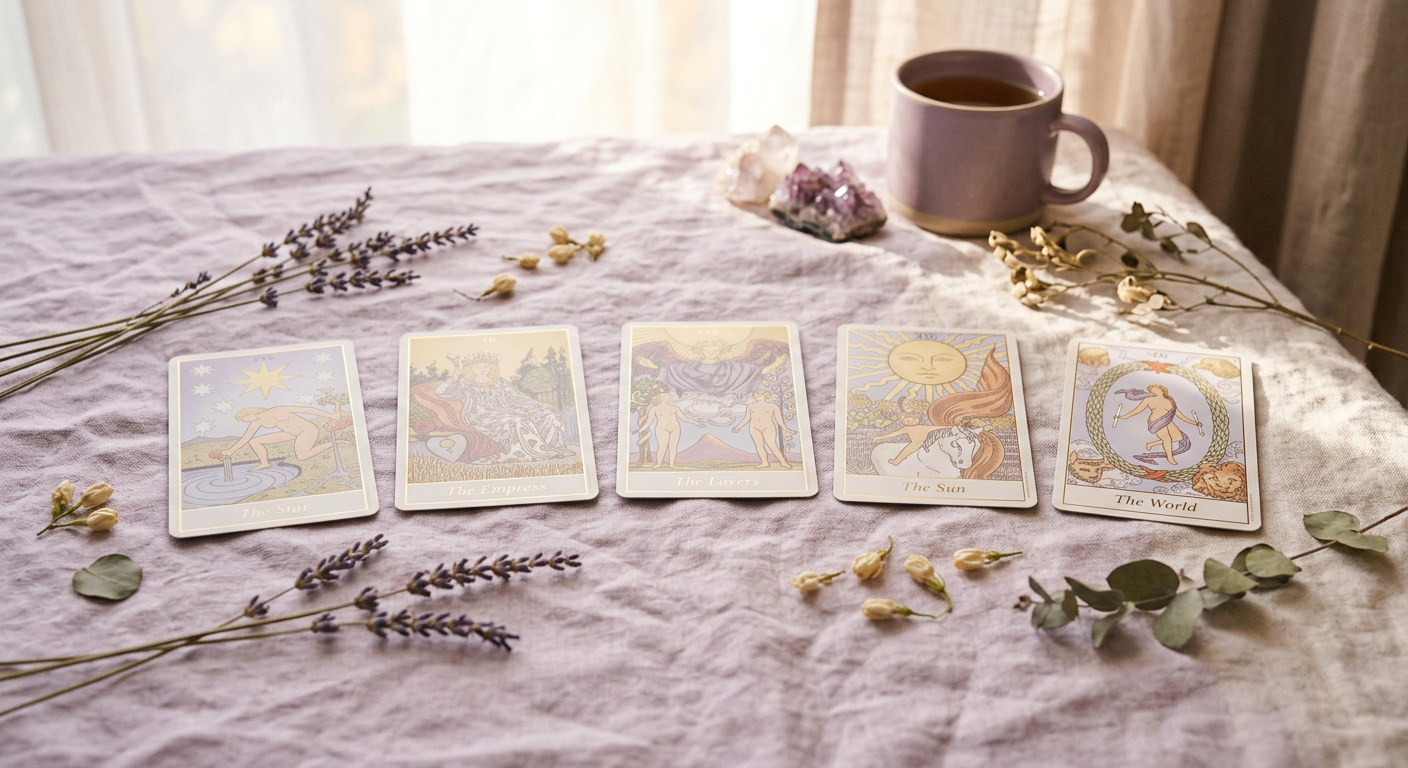
The 5-Card Grounding Spread centers you in present-moment awareness. Card 1 represents what grounds you now, Card 2 shows what destabilizes you, Card 3 reveals hidden strengths, Card 4 indicates what needs release, and Card 5 offers stability guidance. This spread works beautifully for panic attacks or racing thoughts.
The 1-Card Daily Check-In provides ongoing anxiety monitoring. Each morning, draw one card asking "What do I need to know today for my peace?" Track patterns weekly to identify emotional triggers and growth. For deeper exploration, try a three card spread to expand your daily insights into past-present-future context.
Step-by-Step Guide: Using Tarot During Anxious Moments
When anxiety strikes, a quick tarot ritual can provide immediate grounding and clarity. Begin by finding a quiet space and taking three deep breaths, placing one hand on your heart and the other on your belly. Shuffle your deck while focusing on the question: "What do I need to know right now?"
Draw a single card for immediate insight or use a simple three card spread representing your current state, hidden influences, and guidance forward. Before interpreting, practice the 5-4-3-2-1 grounding technique: identify five things you see, four you can touch, three you hear, two you smell, and one you taste.
As you reflect on each card's imagery, journal your immediate emotional response without judgment. Note the date, your anxiety level (1-10), the cards drawn, and any physical sensations you notice. Over weeks, patterns emerge—perhaps Swords appear during work stress, or Cups during relationship concerns. This tracking transforms random readings into a personalized anxiety map, helping you recognize triggers and measure progress in your emotional wellness journey.
Recognizing Anxiety and Stress in Tarot Cards
Certain tarot cards serve as powerful indicators of anxiety and mental strain. The Tower represents sudden upheaval and overwhelming stress, while the Nine of Swords symbolizes sleepless nights and racing thoughts. The Ten of Wands depicts crushing burdens and exhaustion from carrying too much responsibility.
In the minor arcana, Swords cards frequently signal mental distress—the Three of Swords indicates emotional pain, and the Five of Swords suggests conflict-driven anxiety. However, supportive cards like the Star bring hope and healing, while the Four of Swords counsels necessary rest and recovery.
Card combinations reveal deeper insights: the Nine of Swords paired with the Eight of Cups suggests anxiety stemming from avoiding difficult situations, while the Ten of Wands alongside the Ace of Wands indicates burnout that requires renewed passion. When The Tower appears with the Temperance card, it signals that balance will emerge from chaos, offering a pathway through anxiety toward emotional equilibrium and inner peace.
Combining Tarot with Professional Anxiety Treatment
Tarot should never replace professional mental health care. While tarot readings can offer valuable self-reflection and emotional insight, they are not a substitute for therapy, medication, or evidence-based treatments prescribed by licensed mental health professionals. If you're experiencing anxiety, consult a psychiatrist, psychologist, or licensed therapist first.
Many therapists support complementary practices that enhance self-awareness. When discussing tarot with your mental health provider, frame it as a reflective journaling tool rather than a diagnostic method. Share insights from your readings during therapy sessions to explore patterns in your thinking and emotional responses.
Use tarot as a supplement, not your sole intervention. A healthy frequency might be 2-3 readings weekly alongside regular therapy appointments and prescribed treatments. Online tarot platforms can provide convenient daily reflection prompts between professional sessions.
Integrate tarot insights into your comprehensive treatment plan by journaling about cards that resonate with therapeutic goals. This creates continuity between sessions while maintaining professional guidance as your primary support system.
AI-Powered Tarot Readings for Instant Anxiety Support
In 2026, AI tarot reading technology has revolutionized anxiety management by delivering instant, reflective guidance whenever distress strikes. These digital platforms maintain tarot's core therapeutic benefit—prompting introspection through symbolic imagery—while eliminating wait times that can intensify anxious moments. AI readings provide 24/7 availability, crucial when anxiety peaks at 3 AM or during unexpected triggers.
Privacy advantages are significant for those experiencing social anxiety around traditional readers. Digital platforms eliminate judgment fears and performance pressure, allowing users to explore vulnerable emotions privately. You can revisit readings multiple times, processing insights at your own pace without feeling rushed.
AI versus human readings for anxiety management:
AI readings excel in immediate accessibility, consistency, and affordability, offering unlimited sessions without scheduling constraints. However, human readers provide nuanced emotional attunement and adaptive questioning that AI cannot fully replicate. The ideal approach often combines both: AI for daily check-ins and immediate relief, human readers for deeper therapeutic work during major anxiety episodes.
Real Experiences: Tarot for Anxiety Relief Stories
Sarah's Social Anxiety Journey: A 28-year-old graphic designer used morning one-card draws before networking events. She found the Five of Cups helped her acknowledge pre-event dread while shifting focus toward connection opportunities. Over three months, her anticipatory anxiety decreased noticeably, though she still experienced nervousness during actual events.
Marcus's Generalized Anxiety Practice: This 42-year-old teacher incorporated weekly three-card spreads into his therapy routine. The structured reflection helped identify worry patterns, particularly around work performance. While tarot didn't eliminate his anxiety, it provided a tangible tool for processing rumination between counseling sessions.
Elena's Limitations and Adaptations: A 35-year-old nurse initially struggled with complex spreads during high-anxiety periods. She simplified her practice to single cards with brief journaling, finding this more manageable during acute stress. Her experience highlights that tarot effectiveness varies individually—what works during calm periods may need adjustment during crisis moments.
Begin Your Tarot Journey for Anxiety Relief Today
Tarot reading offers a powerful pathway to mindfulness and self-reflection, helping you process anxious thoughts through symbolic imagery and intentional card interpretation. As you've discovered throughout this guide, tarot creates sacred moments of pause—interrupting anxiety's spiral and redirecting your focus toward deeper self-understanding. The practice complements professional mental health support beautifully, serving as a daily ritual for emotional regulation rather than a replacement for therapy or medication.
Ready to experience these benefits firsthand? Try a free AI tarot reading with no registration required and receive instant, personalized guidance for your anxiety concerns. Whether you're seeking clarity on a specific worry or simply need a grounding moment in your day, your first reading awaits—completely free and available 24/7. Start your journey toward calm today and discover how this ancient practice can support your modern wellness routine.