Introduction
Have you ever felt stuck in an emotional loop, unable to process grief, anxiety, or heartbreak? Tarot spreads for emotional healing offer a powerful pathway to self-discovery and inner peace. Unlike fortune-telling, these intentional card arrangements serve as mirrors reflecting your subconscious thoughts, helping you untangle complex feelings and gain clarity during challenging times.
Tarot works as a therapeutic tool by creating space for honest self-reflection. Each card's imagery and symbolism acts as a catalyst, prompting you to explore emotions you might otherwise avoid. When you draw cards with intention, you're essentially having a conversation with your inner wisdom, accessing insights that traditional journaling or meditation might not reveal. Tools like Tarot Reader can support this intentional practice by providing structured guidance as you develop your card-drawing rituals and deepen your connection to the cards' emotional resonance.
This guide introduces specific spreads designed for emotional wellness—from processing grief and releasing past trauma to building self-compassion and finding closure. You'll learn how to prepare your space, ask meaningful questions, and interpret cards through an emotional healing lens, transforming tarot practice into a sustainable self-care ritual.
Why Tarot Works for Emotional Processing
Tarot functions as a psychological mirror, leveraging symbolic imagery to bypass conscious defenses and access deeper emotional truths. The archetypal symbols in tarot cards activate pattern recognition in the brain, helping you identify recurring emotional themes you might otherwise overlook. When you draw The Tower during a period of upheaval or The Star after hardship, these images provide a visual vocabulary for feelings that often resist verbal expression.
The practice creates what psychologists call "narrative coherence"—transforming fragmented emotional experiences into structured stories. By arranging cards in specific spreads, you externalize internal conflicts, making abstract emotions tangible and manageable. This projection technique, similar to methods used in art therapy, allows safe exploration of trauma without direct confrontation.
Research suggests that ritualized reflection practices like tarot enhance emotional regulation by engaging both analytical and intuitive thinking. Platforms like Tarot Reader facilitate this structured emotional exploration by offering consistent frameworks for your practice, helping you establish the kind of regular ritual that strengthens emotional awareness over time. The cards don't predict your future—they illuminate your present emotional landscape, revealing subconscious patterns and offering fresh perspectives on persistent challenges.
Essential Emotional Healing Tarot Spreads
Tarot spreads for emotional healing provide structured frameworks for exploring inner wounds, processing difficult feelings, and discovering pathways toward wholeness. These carefully designed layouts guide you through specific emotional territories, offering clarity when feelings become overwhelming. Each spread addresses distinct healing needs, from releasing heartbreak to confronting shadow aspects of yourself. The five spreads presented here range from simple three-card layouts for beginners to more complex patterns for deeper work. Whether you're navigating grief, anxiety, relationship pain, or seeking general emotional balance, these spreads create safe containers for self-exploration. The key lies in approaching each reading with openness and self-compassion, allowing the cards to reflect truths you may already sense but haven't fully acknowledged. For those new to emotional healing work, consider starting with digital tarot readings to familiarize yourself with card interpretations before diving into these specialized spreads.
Preparing Your Space for Healing Readings
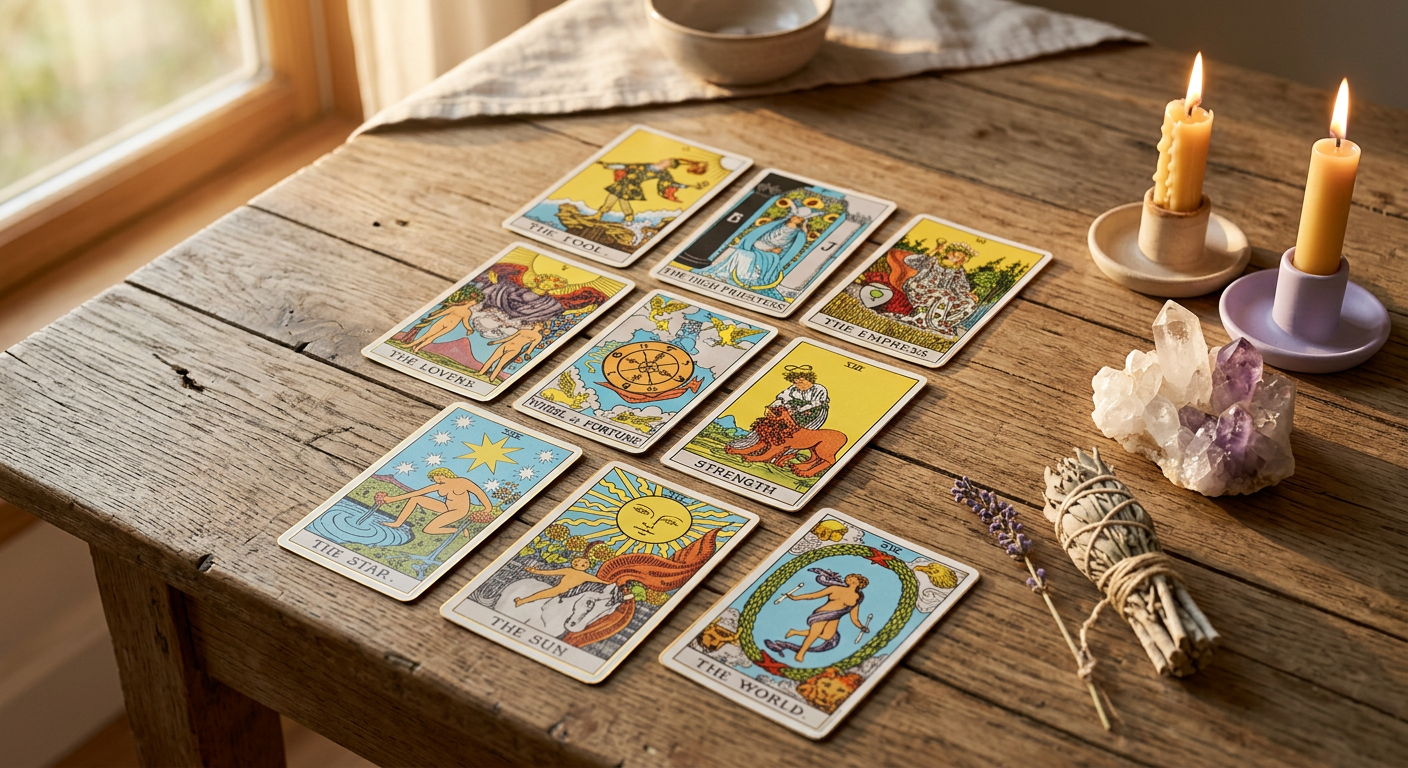
Creating a sacred space transforms tarot readings from casual card-pulling into intentional healing rituals. Begin by selecting a quiet area where you won't be interrupted for at least 30 minutes. Clear the physical space by removing clutter and cleansing energetically with sage, palo santo, or simply opening windows for fresh air. Dim lighting or candles can shift your mental state from everyday consciousness to reflective awareness. Ground yourself through deep breathing—inhale for four counts, hold for four, exhale for six—repeating until you feel centered. Set a clear intention by stating aloud or writing down what emotional healing you seek from this reading. Place meaningful objects nearby: crystals like rose quartz for heart healing or amethyst for emotional balance, a journal for recording insights, and water to stay hydrated during emotional work. This preparation signals to your subconscious that you're entering protected space for vulnerable self-examination.
Interpreting Cards in Emotional Healing Context
Reading tarot for emotional healing requires shifting from predictive interpretation to therapeutic insight. The Star signals hope and renewal after difficult periods, while The Sun represents breakthrough moments of joy and clarity. The Six of Cups often indicates healing childhood wounds through self-compassion.
When interpreting cards therapeutically, focus on emotional patterns rather than future events. The Five of Swords reversed suggests releasing grudges, while The Tower upright may represent necessary emotional breakdown before rebuilding. The Four of Swords indicates needed rest during emotional processing.
Recognize progress indicators: Cups cards flowing in sequence show emotional development, while reversed cards often highlight resistance requiring attention. The Death card typically signals transformational healing rather than literal endings. Practice reading cards with emotional questions to develop this interpretive skill, allowing intuitive connections between card imagery and personal feelings to guide deeper self-understanding.
Integrating Tarot Insights Into Your Healing Journey
Transform your tarot readings into lasting emotional growth by establishing a consistent integration practice. After each reading, spend 10-15 minutes journaling with prompts like "What emotions arose during this reading?" or "How does this card's message challenge my current perspective?" These reflections deepen self-awareness and track healing patterns over time.
For optimal results, conduct emotional healing readings weekly or bi-weekly. Daily readings can create dependency and overwhelm, while monthly sessions may miss crucial emotional shifts. This balanced frequency allows insights to integrate naturally without becoming a crutch.
Combine tarot with complementary practices for enhanced healing. Begin meditation sessions by drawing a single card for focus, or discuss tarot insights during therapy appointments to explore recurring themes. Shadow work particularly benefits from tarot's archetypal imagery—use challenging cards like The Tower or Five of Cups to illuminate hidden wounds. Pairing tarot with breathwork, creative expression, or nature walks helps embody card messages beyond intellectual understanding, creating holistic transformation.
Getting Started: Emotional Healing Tarot for Beginners
If you're new to tarot, the most important thing to understand is this: your intuition matters far more than memorizing card meanings. Trust your gut reactions when you see a card—what colors stand out? What emotions does the imagery evoke? These instinctive responses are often more valuable than textbook definitions.
Start with a simple three-card spread before attempting complex layouts. A basic past-present-future or situation-obstacle-advice format gives you manageable insights without overwhelming confusion. You'll build confidence with each reading.
Many beginners worry they're "doing it wrong" or fear attracting negative energy. Here's the truth: tarot is a reflective tool, not a supernatural force. You're simply creating space for self-awareness and emotional processing. There's no wrong way to connect with the cards if your intention is genuine healing.
You don't need expensive decks or years of study to begin. Choose imagery that resonates with you emotionally, set aside ten quiet minutes, and simply start. Your healing journey begins with that first card.
Conclusion
Your journey with tarot spreads for emotional healing is a deeply personal practice that unfolds at its own pace. Remember that emotional healing isn't a destination but an ongoing process requiring patience, self-compassion, and gentle persistence. The cards serve as mirrors reflecting your inner wisdom, guiding you toward greater self-awareness and emotional balance.
Establishing a regular tarot practice creates a sacred space for continued emotional wellness. Whether you draw cards weekly, during challenging moments, or as part of your daily reflection, consistency strengthens your intuitive connection and deepens your healing work. Each reading offers new insights, helping you navigate emotions with greater clarity and understanding.
Ready to begin your emotional healing journey? Experience free AI-powered tarot readings designed specifically for emotional guidance and personal growth. Our intuitive platform provides personalized interpretations that honor your unique healing path, available whenever you need support and insight.
Trust the process, trust yourself, and allow the wisdom of tarot to illuminate your path toward emotional wholeness.