Introduction
Tarot reading has surged into mainstream consciousness in 2026, with digital platforms and AI-powered tools making ancient wisdom accessible to millions worldwide. Yet many newcomers feel overwhelmed when cards seem to contradict each other or deliver confusing messages. The secret to transformative readings isn't just understanding individual card meanings—it's mastering tarot spreads.
So what is a tarot spread? It's an intentional card layout where each position holds specific meaning, creating a narrative framework that connects cards into coherent guidance. Think of it as the difference between random words and a structured sentence: both contain information, but only one tells a clear story.
Whether you're drawn to AI tarot reading or traditional methods, understanding what is a tarot spread transforms confusion into clarity. Platforms like Tarot Reader offer modern solutions for understanding how different spread positions work together, making it easier for beginners to grasp these structural relationships. This guide reveals how structured layouts turn scattered symbols into actionable insights, which spreads suit different questions, and how to interpret card relationships for meaningful guidance that resonates with your life's challenges and opportunities.
What Is a Tarot Spread and How Does It Work?
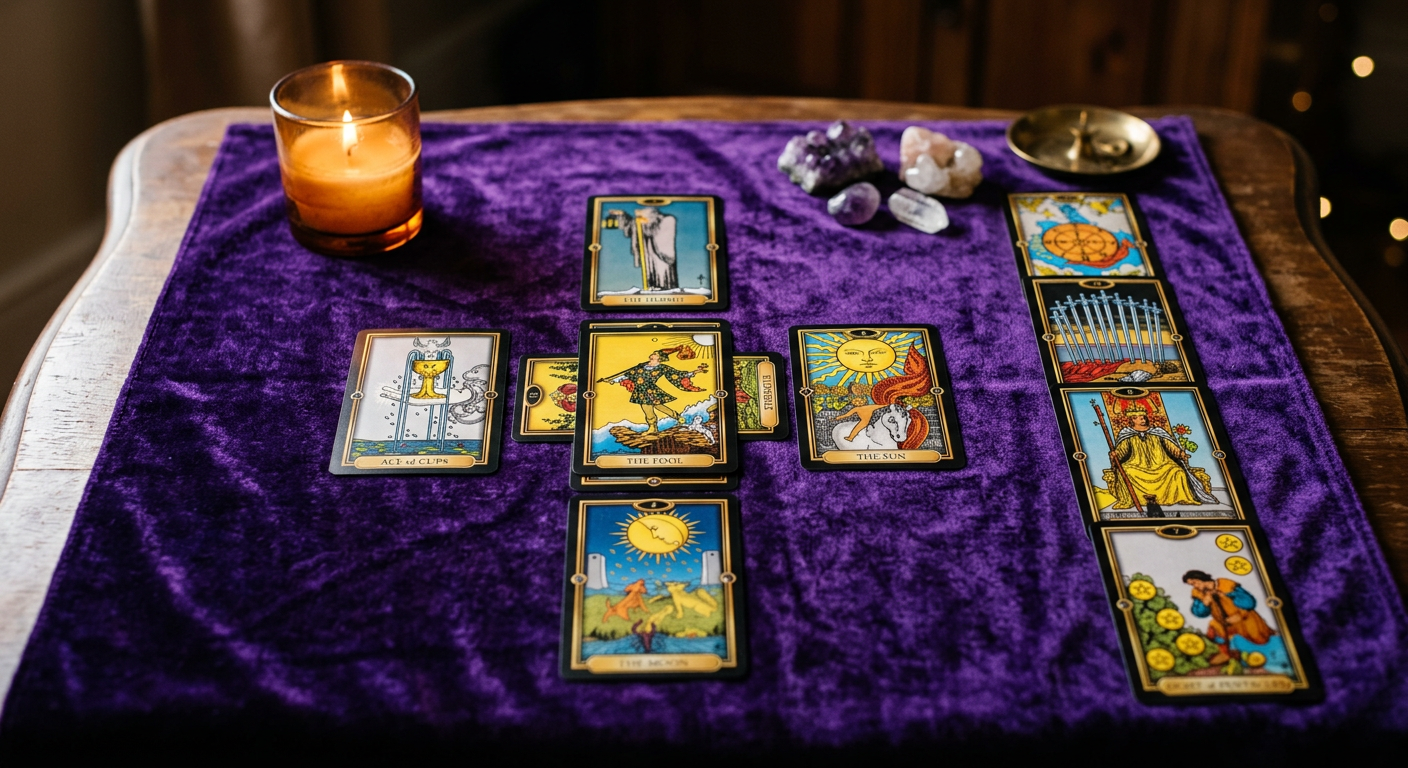
A tarot spread is a predetermined layout where each card position carries a specific, designated meaning that helps interpret your question or situation. Unlike randomly placing cards, spreads create a structured framework—each position might represent elements like "past influences," "present challenges," or "future outcomes." This intentional arrangement transforms individual card meanings into a cohesive narrative.
The magic happens through spatial relationships. When cards appear side-by-side, their energies interact and modify each other's interpretations. A challenging card in the "obstacle" position takes on different significance than the same card in the "advice" position. These positional meanings work together to tell a complete story about your circumstances.
The underlying philosophy suggests that the universe guides which cards appear in which positions, creating meaningful synchronicities. Whether you're using a three card spread or more complex layouts, each position acts like a lens focusing on specific aspects of your inquiry. The spread's structure ensures you examine your question from multiple angles—past experiences informing present situations, external influences versus internal feelings, and potential paths forward. Tools like Tarot Reader help structure these interpretations by clearly defining what each position represents and how the cards interact within the layout, making it easier to see the connections between different aspects of your reading. This multidimensional approach reveals deeper insights than single-card draws.
Popular Types of Tarot Spreads in 2026
Tarot spreads have evolved significantly, with 2026 seeing a blend of traditional layouts and innovative digital adaptations. The single-card draw remains the simplest approach, perfect for daily guidance or quick yes/no clarity. For deeper exploration, the three-card spread offers versatile insights into past-present-future or situation-action-outcome dynamics.
The Celtic Cross, a ten-card powerhouse, continues dominating complex life analysis, revealing hidden influences and potential outcomes. Relationship-focused readers favor the seven-card connection spread, mapping compatibility and emotional dynamics between partners.
Modern digital communities have popularized the decision matrix spread, using five cards to weigh options systematically, while the year-ahead spread uses twelve cards representing each month's energy. The chakra alignment spread has gained traction in wellness circles, using seven cards to assess energetic balance.
Each spread serves distinct purposes: use simpler layouts for specific questions, complex spreads for life-changing decisions, and specialized patterns for targeted areas like career or relationships. Understanding these variations empowers readers to select the most effective tool for their inquiry.
How to Choose the Right Tarot Spread
Selecting the appropriate tarot spread transforms your reading from confusing to clarifying. The key lies in matching your question's complexity to the spread's structure.
Match Complexity to Your Question
Simple yes/no questions work best with single-card or three-card spreads. Complex life decisions requiring nuanced perspectives demand more elaborate layouts like the Celtic Cross or custom spreads with seven or more positions.
Consider Your Experience Level
Beginners should start with one to three-card spreads to build interpretation confidence without overwhelm. As you develop fluency with card meanings and positional significance, graduate to five-card spreads, then advance to ten-card configurations.
Time and Energy Constraints
A quick three-card spread takes 10-15 minutes, perfect for daily guidance. Comprehensive spreads require 30-60 minutes for proper interpretation and reflection.
Question-Spread Pairing Framework
Relationship queries pair naturally with relationship-specific spreads. Career crossroads benefit from decision-making layouts. Timing questions work well with sequential spreads showing past-present-future progressions.
Trust your intuition—if a spread feels right for your question, it probably is.
Step-by-Step Guide to Using a Tarot Spread
Mastering tarot spreads requires a systematic approach that honors both tradition and intuition. Begin by formulating a clear, specific question—avoid yes/no queries and instead ask "What do I need to know about..." or "How can I approach..." This clarity sets your intention and focuses the reading's energy.
Next, shuffle your deck while concentrating on your question. Some readers shuffle until a card falls out; others count to a specific number. There's no wrong method—choose what feels authentic. Once shuffled, lay cards face-down in your chosen spread pattern, placing each card deliberately in its designated position.
The interpretation phase distinguishes skilled readers from beginners. Start by examining each card's traditional meaning within its position's context. A Tower card in a "past" position tells a different story than in an "outcome" position. Then, observe relationships between cards—do multiple Major Arcana appear? Are certain suits dominant? These patterns amplify your reading's message.
Modern AI-powered tarot tools can help beginners learn positional relationships, but developing your intuitive connection remains irreplaceable for meaningful readings.
Benefits of Structured Spreads vs Random Pulls
Structured tarot spreads and random single-card pulls each serve distinct purposes in modern tarot practice. Understanding when to use each approach enhances both accuracy and insight.
Structured spreads provide contextual frameworks that prevent misinterpretation of individual cards. When you pull the Seven of Swords in position three of a Celtic Cross spread, its meaning as "hidden influences" differs dramatically from the same card appearing as a standalone daily draw. The positional context transforms interpretation from guesswork into nuanced analysis.
Maintaining objectivity becomes easier with formal layouts. Spreads force readers to address uncomfortable truths by assigning specific questions to each position, reducing confirmation bias. A relationship spread demands you examine both positive and challenging aspects, while random pulls allow cherry-picking favorable interpretations.
Random single-card pulls excel for daily guidance and quick check-ins, offering immediate clarity without overwhelming detail. Complex life decisions—career changes, relationship crossroads, or major investments—benefit from multi-card spreads that explore various facets simultaneously.
The 2026 tarot landscape increasingly recognizes both methods as complementary tools rather than competing approaches, with experienced readers seamlessly alternating based on inquiry depth and time available.
Tarot Spreads for Different Life Situations
Different life circumstances call for specialized tarot spreads designed to address specific questions and concerns. Understanding which spread to use for each situation enhances the accuracy and relevance of your readings.
Relationship spreads explore the energetic dynamics between two people, revealing communication patterns, emotional compatibility, and partnership potential. The classic seven-card relationship spread examines individual perspectives, shared challenges, and future trajectory. For those seeking guidance on matters of the heart, a relationship spread can illuminate hidden aspects of romantic connections.
Career spreads focus on professional development, workplace dynamics, and vocational direction. The five-card career path layout addresses current position, hidden obstacles, available opportunities, required actions, and likely outcomes. These spreads help navigate job transitions, business decisions, and professional growth.
Spiritual growth spreads support personal transformation and self-discovery journeys. The chakra alignment spread uses seven cards to assess energetic blockages, while the shadow work spread reveals unconscious patterns requiring integration. These introspective layouts facilitate deeper understanding of your authentic self and life purpose.
Frequently Asked Questions About Tarot Spreads
Do I need experience to use tarot spreads?
Absolutely not. Beginners can start with simple one-card or three-card spreads and gradually progress to more complex layouts. The beauty of tarot is its accessibility—your intuition matters more than technical expertise when interpreting cards.
How do online tarot spreads compare to in-person readings?
In 2026, digital and AI-powered platforms offer remarkable accessibility without sacrificing depth. Online tarot readings provide consistent interpretations, instant access, and privacy that some prefer over face-to-face sessions. The cards' wisdom remains unchanged regardless of format.
How many cards should I use?
Most spreads use between 1 and 10 cards depending on your question's complexity. Single-card pulls work for daily guidance, while spreads like the Celtic Cross use ten cards for comprehensive life analysis.
How do I get started?
Begin by selecting a question, choosing an appropriate spread, and trusting your intuitive responses to the cards. Practice regularly, keep a journal of readings, and remember that tarot mastery develops through consistent engagement rather than perfection.
Conclusion
Tarot spreads are the architectural framework that transforms card reading from random chance into intentional, structured guidance. By organizing cards into meaningful positions, spreads create a narrative that addresses your specific questions with clarity and depth. Whether you're exploring a simple three-card past-present-future layout or navigating the comprehensive Celtic Cross, the right spread acts as a roadmap through the wisdom of the tarot.
The beauty of tarot spreads lies in their accessibility—beginners can start with single-card draws while experienced readers can design custom layouts for complex situations. Choosing a spread that aligns with your question type maximizes the insight you'll receive, turning each reading into a focused conversation with your intuition.
In 2026, modern technology has revolutionized how we approach this ancient practice. AI-powered platforms now offer personalized tarot readings that combine traditional spread wisdom with intelligent interpretation, making professional-quality guidance available anytime, anywhere. Whether you're seeking relationship clarity, career direction, or spiritual insight, these tools democratize access to tarot's transformative power. Start your journey today—your cards are waiting to speak.