Introduction
The Celtic Cross tarot spread stands as the gold standard in cartomancy, trusted by both curious beginners and seasoned professionals worldwide. This ten-card layout has earned its reputation through centuries of use, offering comprehensive insights into past influences, present circumstances, and future possibilities. Yet for newcomers shuffling their first deck, the Celtic Cross can feel intimidating—a maze of overlapping cards and mysterious positions that seem impossible to memorize.
You're not alone in these concerns. Most beginners worry about forgetting which position means what, misinterpreting the complex card interactions, or feeling overwhelmed by the sheer amount of information contained in a single spread. These fears are completely natural, and they're exactly why getting the Celtic Cross tarot spread explained simply is so important.
This step-by-step breakdown demystifies each of the ten positions using clear, jargon-free language and practical examples you can apply immediately. Whether you're conducting your first Celtic Cross reading or refining your technique, you'll gain the confidence to interpret this powerful spread with clarity and precision. Many people find that practicing with tools like Tarot Reader helps them become comfortable with the Celtic Cross spread's structure before working with physical cards, making it easier to remember each position's meaning. Let's transform complexity into simplicity, one card position at a time.
1. What the Celtic Cross Spread Is and Why It Works
The Celtic Cross is a ten-card tarot spread that maps the full landscape of a question or situation. Each position reveals a different dimension: your present circumstances, immediate challenges, past influences, future trajectory, subconscious factors, external environment, your hopes and fears, surrounding energies, and the likely outcome. This comprehensive structure makes it ideal for complex life questions where simple yes-or-no answers fall short.
The spread gained prominence in the early 20th century through Arthur Edward Waite and the Hermetic Order of the Golden Dawn, who codified its positions into the system we use today. Their mystical framework transformed tarot from fortune-telling parlor trick into a tool for psychological insight.
The Celtic Cross works because it combines multiple timeframes and perspectives simultaneously. While positions 1-2 address your immediate situation and obstacles, positions 3-4 dig into root causes and emerging possibilities. Positions 5-10 then layer in your internal state, external influences, and trajectory—creating a 360-degree view that reveals patterns you might otherwise miss. This multi-layered approach helps you understand not just what is happening, but why and how to navigate it. Because navigating these complex positions can be challenging for beginners, platforms like Tarot Reader offer guided interpretations that help you see how each position connects to the others, making the spread's comprehensive nature easier to grasp rather than overwhelming.
2. The 10 Card Positions and What Each One Means
Position 1: Present Situation – This card reveals the heart of your question right now. If asking about a job search, the Three of Pentacles might show you're building skills and making connections.
Position 2: Challenge – The crossing card shows what's blocking or testing you. The Five of Cups here could mean you're stuck dwelling on past disappointments instead of seeing new opportunities.
Position 3: Foundation – What's beneath the surface, your subconscious influence. The Moon suggests hidden anxieties affecting your decisions.
Position 4: Recent Past – Events that brought you here. The Tower indicates recent upheaval that set current circumstances in motion.
Position 5: Best Possible Outcome – Your highest potential. The Sun promises success and clarity if you stay your course.
Position 6: Near Future – What's approaching in weeks or months ahead.
Position 7: Your Attitude – How you see yourself in this situation.
Position 8: External Influences – How others or circumstances affect you.
Position 9: Hopes and Fears – Your deepest desires and anxieties.
Position 10: Final Outcome – Where everything leads based on current trajectory.
3. Step-by-Step Guide to Laying Out Your Celtic Cross
Step 1: Shuffle with Intention
Hold your tarot deck and focus clearly on your question. Shuffle the cards while concentrating on what guidance you seek. There's no "correct" shuffling method—some readers prefer overhand shuffling, while others use the riffle technique. Continue until the deck feels ready, typically 30-60 seconds.
Step 2: Draw Ten Cards Face-Down
Once shuffling feels complete, draw ten cards from anywhere in the deck. Place them face-down in front of you in the order drawn. Trust your intuition about which cards to select.
Step 3: Lay Out the Formation
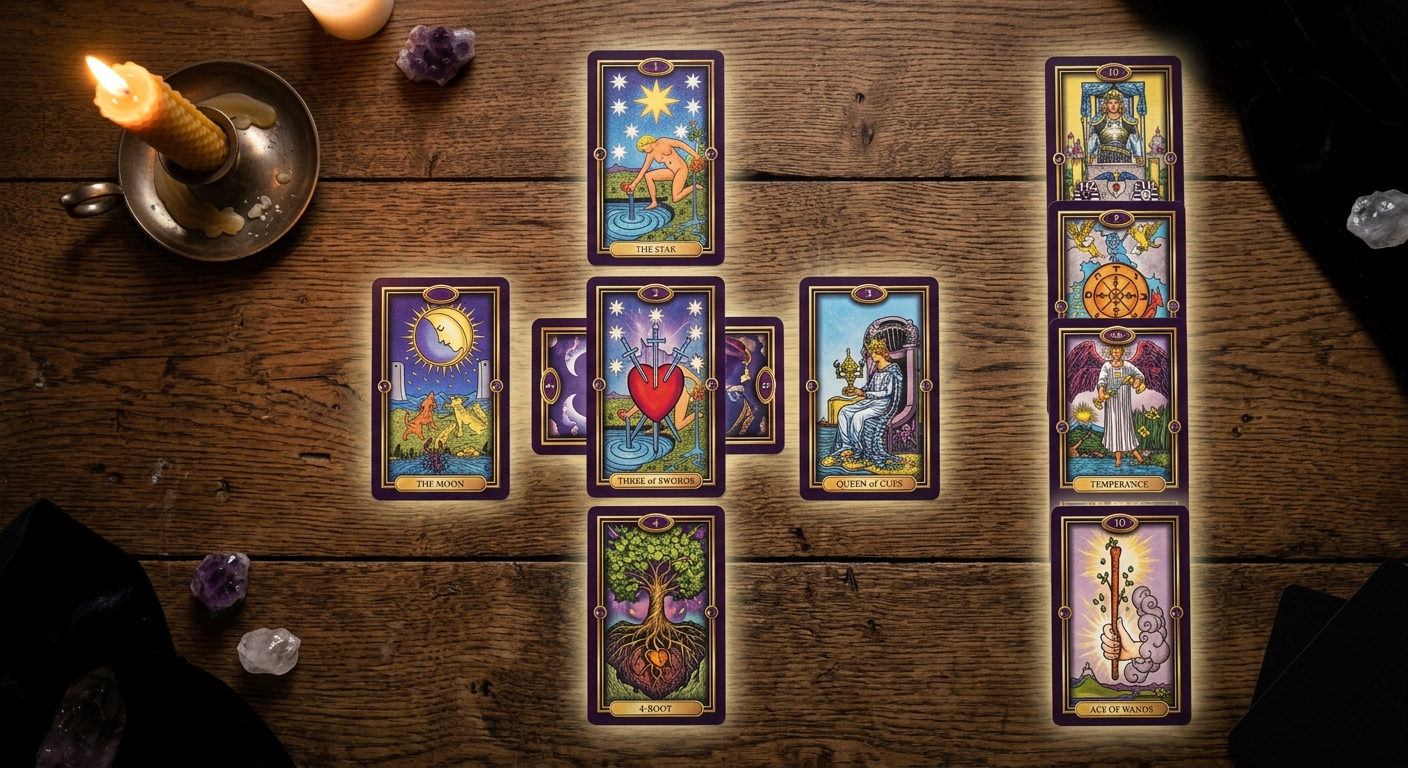
Position cards 1-2 first (the central cross), then cards 3-6 around them (completing the cross). Finally, place cards 7-10 vertically on the right side (the staff). This systematic approach prevents confusion.
Step 4: Reveal Your Cards
You can turn cards over one at a time for gradual insight, or reveal all ten simultaneously for an immediate overview. Beginners often prefer the sequential method to avoid overwhelm. Try a Celtic Cross reading to practice this layout digitally before using physical cards.
4. How to Interpret the Cards in Relation to Their Positions
The same tarot card transforms dramatically depending on where it lands in your Celtic Cross spread. Understanding this positional context is essential for accurate readings.
Consider The Tower card as an example. In Position 1 (Present Situation), it signals current upheaval—perhaps you're experiencing a sudden job loss or relationship breakdown right now. But in Position 10 (Final Outcome), The Tower represents necessary transformation ahead, suggesting that embracing change will ultimately liberate you from outdated structures.
The positions also interact with each other. Position 3 (Subconscious Foundation) reveals the hidden roots influencing Position 1 (Present). If the Three of Swords appears in Position 3 while the Five of Cups sits in Position 1, your current disappointment stems from unhealed past heartbreak.
Read your spread as a flowing narrative, not isolated symbols. Notice how Position 5 (Recent Past) flows into Position 1, then connects to Position 4 (Near Future). This creates a timeline showing how events unfold. When you practice reading the Celtic Cross as an interconnected story, patterns emerge that single-card meanings would miss entirely.
5. Common Beginner Mistakes and How to Avoid Them
Mistake 1: Asking Vague Questions
Questions like "What about my love life?" produce confusing readings because they lack direction. Instead, ask specific, open-ended questions: "What do I need to understand about my current relationship dynamic?" or "How can I attract healthier partnerships?" Specific questions give each position clear context to work with.
Mistake 2: Ignoring Position Context
Reading cards in isolation strips away the Celtic Cross's structure. The Seven of Cups means something different in Position 1 (current situation) versus Position 7 (your attitude). Always interpret each card through its position's lens—the same card reveals different insights depending on whether it represents obstacles, hopes, or outcomes.
Mistake 3: Overcomplicating Reversals
New readers often freeze when cards appear upside-down, second-guessing every intuition. Start by reading all cards upright until you're comfortable with basic meanings. When you're ready, treat reversals as gentle modifications—blocked energy or internalized qualities—rather than complete meaning reversals. Trust your first impression; it's usually correct.
Remember: every expert reader started exactly where you are now.
Conclusion
The Celtic Cross tarot spread is no longer a mystery—it's simply ten positions arranged in a meaningful layout, each telling part of your story. You've learned how Position 1 reveals your present situation, Position 2 shows what crosses you, and Positions 3 through 10 guide you from foundation to outcome. By reading the spread as a flowing narrative rather than isolated cards, you transform complex symbolism into clear insights.
Start your practice with low-stakes questions: "What energy surrounds my week ahead?" or "How can I improve my creative projects?" These simple queries build your confidence before you tackle major life decisions about relationships, career changes, or spiritual growth.
Ready to experience the Celtic Cross firsthand? Try your first Celtic Cross spread on Tarot Reader's platform, where guided position prompts walk you through each card placement and AI-powered interpretations help you understand the connections between positions. The more you practice, the more naturally the ten-card story will unfold before you.