Introduction
You're lying awake at 3 AM, mind racing through tomorrow's deadlines, relationship tensions, and an endless mental checklist that refuses to quiet. You're not alone—the Anxiety and Depression Association of America reports that anxiety disorders affect 40 million adults annually, with many seeking alternatives beyond traditional therapy and medication.
Enter an unexpected ally: tarot cards. Before dismissing this as mystical nonsense, consider that tarot reading for anxiety and stress isn't about predicting the future—it's a structured mindfulness practice that creates space for self-reflection and emotional processing. As people increasingly explore digital wellness tools, platforms like Tarot Reader have made these contemplative practices more accessible for those seeking anxiety management support.
Whether you approach tarot from a spiritual perspective or view it through a psychological lens as a projective technique similar to Rorschach tests, the benefits remain consistent. The act of shuffling cards, formulating questions, and interpreting symbolic imagery interrupts anxious thought patterns while providing a framework for examining your concerns from fresh angles.
In this guide, you'll discover five evidence-informed methods that transform tarot into a practical tool for managing anxiety, gaining decision-making clarity, and processing difficult emotions—no crystal ball required.
1. How Tarot Functions as a Reflective Tool for Anxiety Management
Tarot reading works as a structured self-reflection exercise that externalizes internal emotional chaos. When anxiety creates overwhelming mental noise, the act of selecting and interpreting cards provides a tangible framework for processing abstract feelings. Each card becomes a mirror reflecting subconscious thoughts that might otherwise remain buried beneath worry and rumination.
The psychological mechanism behind this practice aligns with narrative therapy principles. By assigning symbolic meaning to visual imagery, you create distance from anxious thoughts, transforming them from overwhelming internal experiences into observable narratives. This externalization allows you to examine anxiety from a new perspective rather than being consumed by it. Tools like Tarot Reader offer structured readings that guide users through this process, providing consistent frameworks that help establish regular self-reflection habits.
The focused attention required during a tarot reading interrupts the repetitive thought patterns characteristic of anxiety. As you concentrate on card meanings and their relationships, your mind shifts from unproductive rumination to active meaning-making. This cognitive engagement activates different neural pathways, similar to how journaling or guided meditation redirects anxious energy into constructive self-examination, creating mental space for emotional processing and insight.
2. Five Essential Tarot Spreads Specifically Designed for Stress Relief
The Anxiety Release Spread (3 Cards)
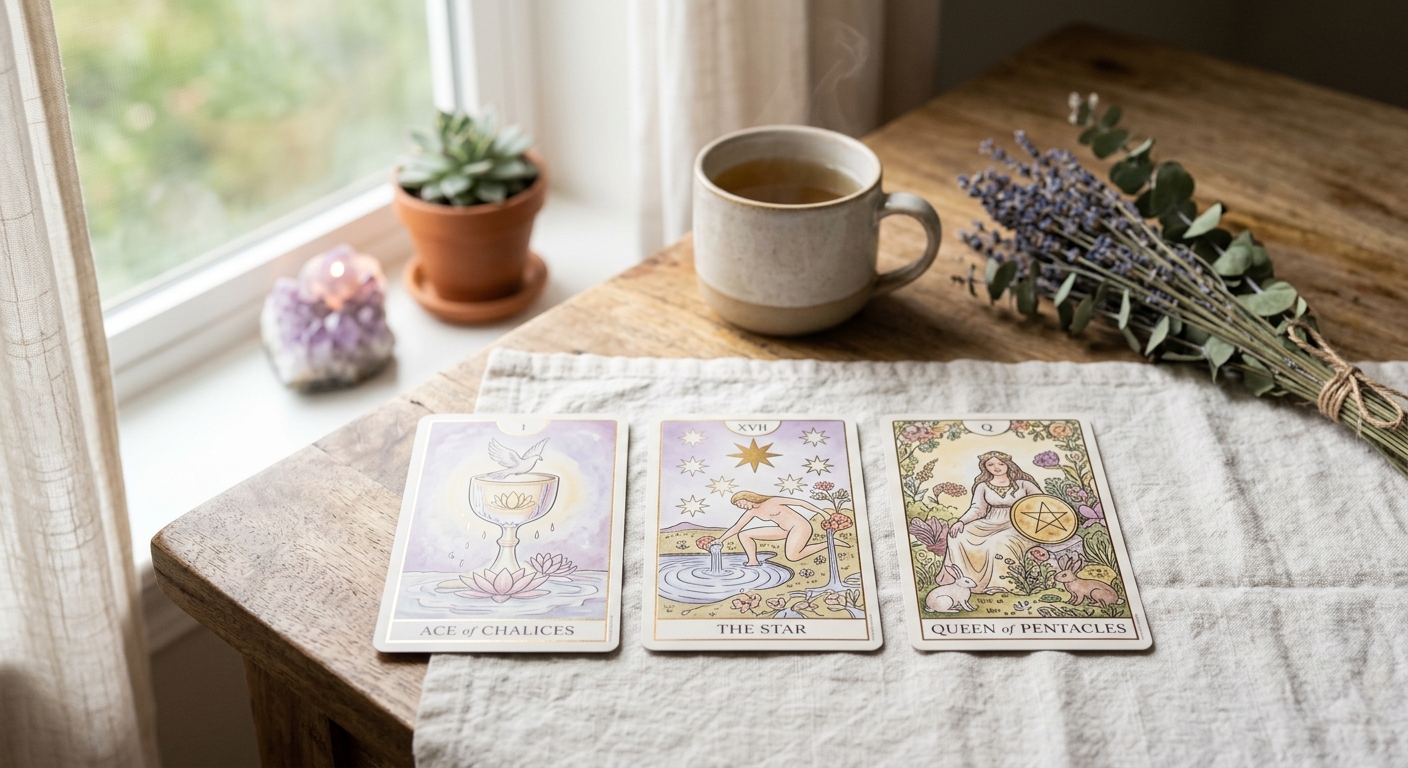
This foundational spread identifies the root cause of your anxiety, its current impact, and your path forward. Position one reveals underlying triggers—often subconscious patterns or unresolved emotions. Position two shows how stress manifests in your present circumstances, while position three offers guidance toward relief and emotional balance.
The Grounding Spread (5 Cards)
A comprehensive wellness assessment examining mental clarity (position one), emotional state (position two), physical tension (position three), spiritual alignment (position four), and actionable next steps (position five). This holistic approach helps you understand which life areas need attention most urgently.
The Decision Clarity Spread (4 Cards)
Perfect for choice-related anxiety, this spread explores your fears (position one), hopes (position two), practical advice (position three), and likely outcome (position four). Many practitioners find this particularly effective when facing career transitions or relationship decisions. You can explore similar structured approaches through a three card spread for additional perspective.
3. Key Tarot Cards That Signal Stress and Their Healing Counterparts
Learning to recognize stress indicators in your tarot readings empowers you to address anxiety before it overwhelms you. The Nine of Swords depicts someone sitting upright in bed, head in hands—a powerful symbol of anxiety, racing thoughts, and sleepless nights. When this card appears, it signals mental anguish and worry spiraling out of control.
The Ten of Wands shows a figure bent under the weight of ten heavy staffs, representing overwhelming responsibilities and burnout. This card appears when you've taken on too much without asking for help.
The Five of Pentacles illustrates two figures trudging through snow past a warm church window—symbolizing financial insecurity, isolation, and feeling left out in the cold during difficult times.
Fortunately, healing cards offer guidance toward relief. The Star brings hope, renewal, and spiritual healing after dark periods. Temperance encourages balance, patience, and moderation in all things. The Four of Swords depicts rest and recovery, urging you to pause and recharge.
Context matters immensely—these cards shift meaning based on surrounding cards and your specific question during a three card spread.
4. Integrating Tarot with Mindfulness and Meditation Practices
Combining tarot reading for anxiety and stress with mindfulness practices creates a powerful synergy that deepens self-awareness and amplifies calming effects. This integrated approach transforms card readings from simple divination into comprehensive meditation experiences.
Pre-Reading Meditation Ritual
Begin with five minutes of grounding breath work. Sit comfortably, close your eyes, and practice 4-7-8 breathing: inhale for four counts, hold for seven, exhale for eight. As your nervous system settles, set a clear intention such as "I seek clarity about my current stress triggers" or "I'm open to guidance for inner peace."
Mindful Card Contemplation
After drawing your cards, resist the urge to immediately interpret. Spend 2-3 minutes observing each card's imagery without judgment. Notice colors, symbols, and the emotions they evoke. This silent contemplation allows intuitive insights to surface naturally.
Post-Reading Integration
Close your session with reflective journaling. Write what resonated most, then craft affirmations based on card messages. If The Star appeared, try: "I trust in renewal and hope during challenging times." This practice, available through guided tarot sessions, solidifies insights into actionable self-care tools.
5. Establishing a Sustainable Tarot Self-Care Routine for Mental Wellness
Creating a consistent tarot practice for anxiety management requires balance and intentionality. For general mental wellness, weekly check-ins provide sufficient structure without overwhelming your schedule. During particularly stressful periods—job transitions, relationship challenges, or major life changes—daily single-card draws offer grounding and perspective without excessive time commitment.
Establish a dedicated reading space that signals calm to your nervous system. This might include soft lighting, comfortable seating, and minimal distractions. Keep a tarot journal to track patterns in your readings, noting which cards appear during specific emotional states and how your interpretations evolve over time.
Set healthy boundaries by limiting readings when you're emotionally dysregulated or seeking certainty about uncontrollable outcomes. Tarot works best as a reflective tool, not a decision-making crutch.
Recognize when professional support is necessary. If anxiety interferes with daily functioning, causes physical symptoms, or persists despite self-care efforts, consult a licensed therapist. Tarot complements professional treatment but should never replace evidence-based mental health care for clinical conditions.
Conclusion
Throughout this guide, we've explored five powerful methods for using tarot reading for anxiety and stress management: the daily single-card draw for grounding, the three-card spread for perspective, the chakra alignment spread for mind-body connection, the decision-making spread for clarity, and journaling prompts for deeper self-reflection. Each approach offers unique psychological benefits, from externalizing worries to activating your subconscious wisdom and creating mindful pauses in overwhelming moments.
It's essential to remember that tarot works best as part of a holistic mental wellness toolkit alongside professional support, meditation, exercise, and other evidence-based practices. What resonates with one person may not work for another, so we encourage you to experiment with different spreads and approaches to discover what brings you the most relief.
Ready to experience the calming power of tarot firsthand? Try a free anxiety-focused tarot reading designed specifically to help you process stress, gain perspective, and reconnect with your inner guidance. Your path to greater peace begins with a single card.