Introduction
Have you ever hesitated to read tarot cards for yourself, worried that your personal bias might cloud the messages? You're not alone—but here's the truth: self-readings are one of the most powerful tools for personal growth and spiritual development available to you.
Unlike waiting for an appointment with a tarot reader, doing tarot readings for yourself offers immediate access to guidance exactly when you need it. Whether you're navigating a difficult decision at 2 AM or seeking clarity during your morning routine, your deck is always ready to provide insight. This direct connection creates a unique intimacy with the cards that deepens your intuitive abilities over time—something that develops differently than the external perspective a tarot reader brings to their consultations.
The concern about objectivity is valid but overblown. While emotions can influence interpretation, they also provide valuable context that an outside reader might miss. Your subconscious knows what you need to hear, and with the right approach, you can distinguish between wishful thinking and genuine guidance.
This guide breaks down five essential steps that make self-reading accessible even for complete beginners. You'll learn how to create sacred space, formulate effective questions, interpret cards with clarity, and integrate insights into meaningful action—transforming tarot from mysterious divination into a practical tool for self-reflection.
1. Prepare Your Space and Mindset
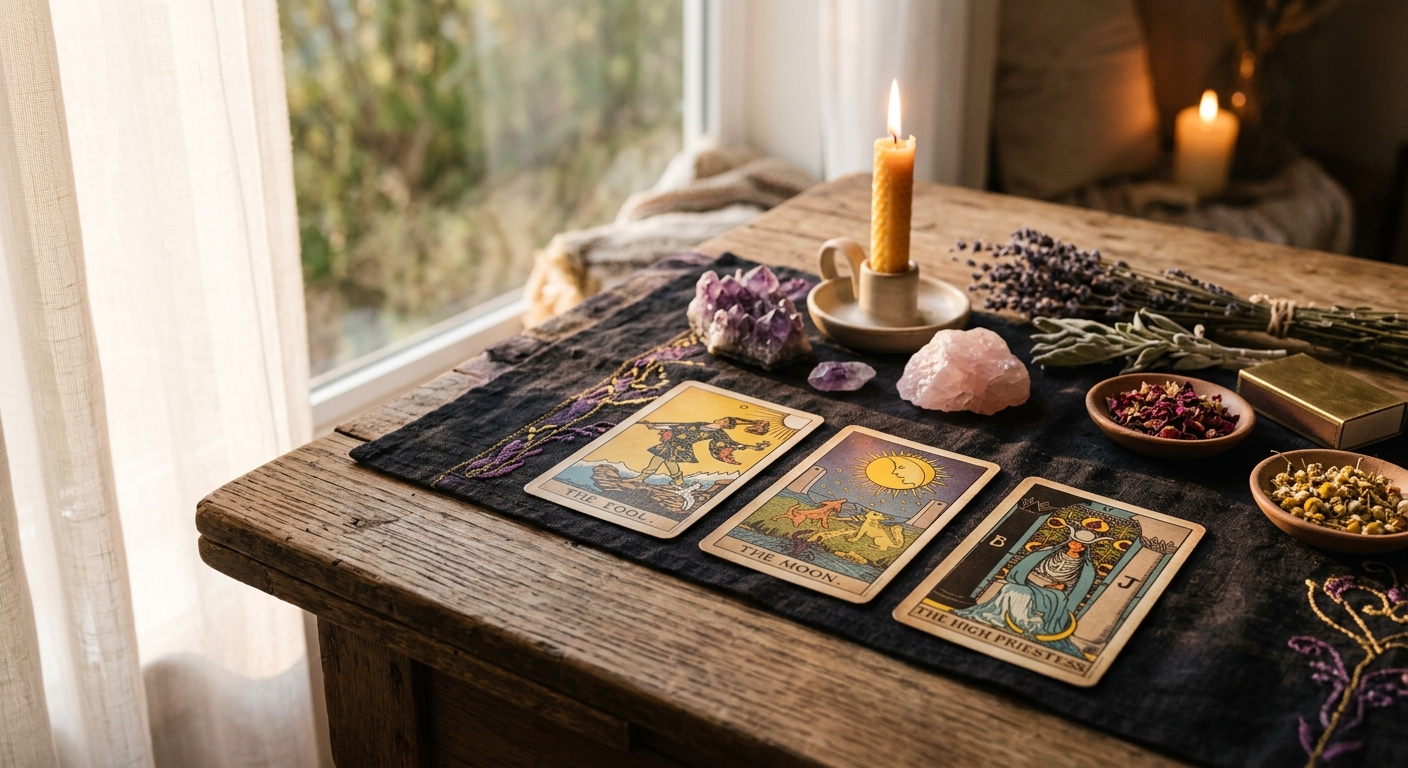
Creating the right environment is essential when learning how to do a tarot reading for yourself. Begin by selecting a quiet, comfortable space where you won't be interrupted. Clear your reading surface and arrange your tarot deck, a cloth or mat, and any optional tools like crystals or candles within easy reach.
Energetic cleansing helps establish a focused atmosphere. Light sage, palo santo, or incense to purify the space through smoke cleansing. Alternatively, use sound clearing with bells or singing bowls, or practice visualization by imagining white light filling the room and clearing stagnant energy. This ritual preparation mirrors what a professional tarot reader does before sessions—establishing boundaries between ordinary life and sacred reading space.
Ground yourself before shuffling the cards. Take five deep breaths, feeling your connection to the present moment. Place both feet flat on the floor and visualize roots extending from your body into the earth. Set a clear intention for your reading—whether you're seeking guidance on a specific question or general insight into your current situation. This mental preparation ensures your reading remains focused and meaningful, allowing intuitive messages to flow naturally through the cards. While consulting with a tarot reader can offer the benefit of their experience in maintaining this sacred space, developing your own grounding practice creates a personal connection to your readings that strengthens over time.
2. Formulate Effective Questions
The quality of your tarot reading hinges on how you phrase your questions. Open-ended questions unlock deeper insights, while yes/no questions limit the cards' guidance to binary answers that miss nuance.
Effective question formats begin with "What," "How," or "Why" to encourage exploration. For love: "What do I need to understand about my relationship dynamics?" beats "Will we stay together?" For career: "How can I best navigate this job transition?" outperforms "Should I quit?"
Common pitfalls include predictive questions ("When will I meet someone?"), which remove your agency, and overly vague inquiries ("What's my future?"). Reframe by focusing on actionable guidance: "What steps can I take to attract meaningful connections?" or "What opportunities should I focus on this quarter?"
For spiritual growth, ask "What limiting belief is holding me back?" rather than "Am I on the right path?" Decision-making questions work best when exploring consequences: "What should I consider before making this choice?" This approach transforms tarot readings into powerful self-reflection tools rather than fortune-telling exercises.
3. Choose Your Tarot Spread
Selecting the right spread structure determines how effectively you'll interpret your cards. Start with simple layouts and progress as your confidence grows.
One-Card Daily Pull works perfectly for morning guidance or quick check-ins. Draw a single card to receive focused insight on your day's energy, immediate challenges, or a specific question. This practice builds familiarity with each card's personality while creating a consistent reading habit.
Three-Card Spreads offer versatility for self-readings. The classic past-present-future layout reveals how previous events influence your current situation and likely outcomes. Alternatively, use situation-action-outcome to understand your circumstances, identify what action to take, and see potential results. These spreads provide depth without overwhelming complexity.
Celtic Cross Spread represents the traditional ten-card layout with positions covering present circumstances, challenges, foundation, recent past, possible future, near future, self-perception, external influences, hopes or fears, and final outcome. Graduate to this comprehensive spread once you're comfortable interpreting multiple cards together and understanding how positions modify card meanings.
4. Interpret Cards with Intuition and Knowledge
The most powerful tarot readings emerge from balancing traditional card meanings with your personal intuitive responses. When you first turn over each card, pause before reaching for your guidebook. Notice your immediate emotional reaction—does the imagery feel comforting or unsettling? What specific symbols catch your attention?
After capturing these first impressions, consult your guidebook to understand the card's traditional meanings. Rather than memorizing definitions, look for connections between the established interpretation and your intuitive response. The Tower might traditionally signify upheaval, but if you noticed the lightning first, your reading might emphasize sudden revelation over destruction.
Journaling transforms interpretation from guesswork into skill. After each reading, record the cards drawn, your initial feelings, guidebook meanings, and how the reading ultimately related to your situation. Over time, you'll discover personal associations—perhaps the Three of Cups consistently appears before social gatherings, or the Eight of Pentacles signals periods of focused work.
This documented practice helps you recognize patterns and develop confidence in your interpretive voice, making each subsequent reading more insightful than the last.
5. Common Mistakes and Objectivity Tips
Self-reading carries unique challenges that can compromise accuracy. The most common pitfall is over-reading—pulling cards repeatedly on the same question hoping for a different answer. This creates confusion rather than clarity, as each reading adds conflicting layers of interpretation.
Confirmation bias represents another significant obstacle. When emotionally invested in an outcome, you may unconsciously interpret cards to support what you want rather than what they actually reveal. The Seven of Cups might look like abundant opportunities when you're hoping for good news, but objectively shows confusion and illusion.
Maintain objectivity through these practical strategies:
Implement waiting periods between readings on the same topic—at least 24 hours allows emotional distance. Document your interpretations immediately in a journal before outcomes unfold; this accountability prevents retrospective reinterpretation. Use verification pulls: draw a single clarification card asking "What am I missing?" to challenge your initial reading.
Consider exploring different tarot spreads that naturally encourage objectivity, such as shadow work layouts that deliberately surface uncomfortable truths you might otherwise avoid.
Conclusion
Mastering how to do a tarot reading for yourself becomes achievable when you follow these five essential steps: creating a focused preparation ritual, formulating clear and specific questions, selecting the appropriate spread for your inquiry, interpreting cards through both traditional meanings and personal intuition, and maintaining objectivity by journaling your insights. Each component builds upon the previous one, creating a comprehensive framework for meaningful self-readings.
Remember that tarot reading is a skill that deepens with consistent practice. Your first readings may feel uncertain, but trust develops as you work regularly with your deck. Allow yourself patience during the learning process—even experienced readers continue discovering new layers of meaning in familiar cards.
Ready to enhance your practice? Try our free AI-powered tarot reading for instant guidance that complements your interpretations. Compare the AI's insights with your own readings to expand your understanding and build confidence in your intuitive abilities. Start your journey today and discover the profound wisdom tarot offers for self-reflection and personal growth.