Introduction
The world of tarot reading has undergone a remarkable transformation in recent years. While traditional face-to-face sessions with experienced practitioners remain popular, digital tarot platforms powered by artificial intelligence have emerged as compelling alternatives, offering instant access to card interpretations and personalized guidance at any hour.
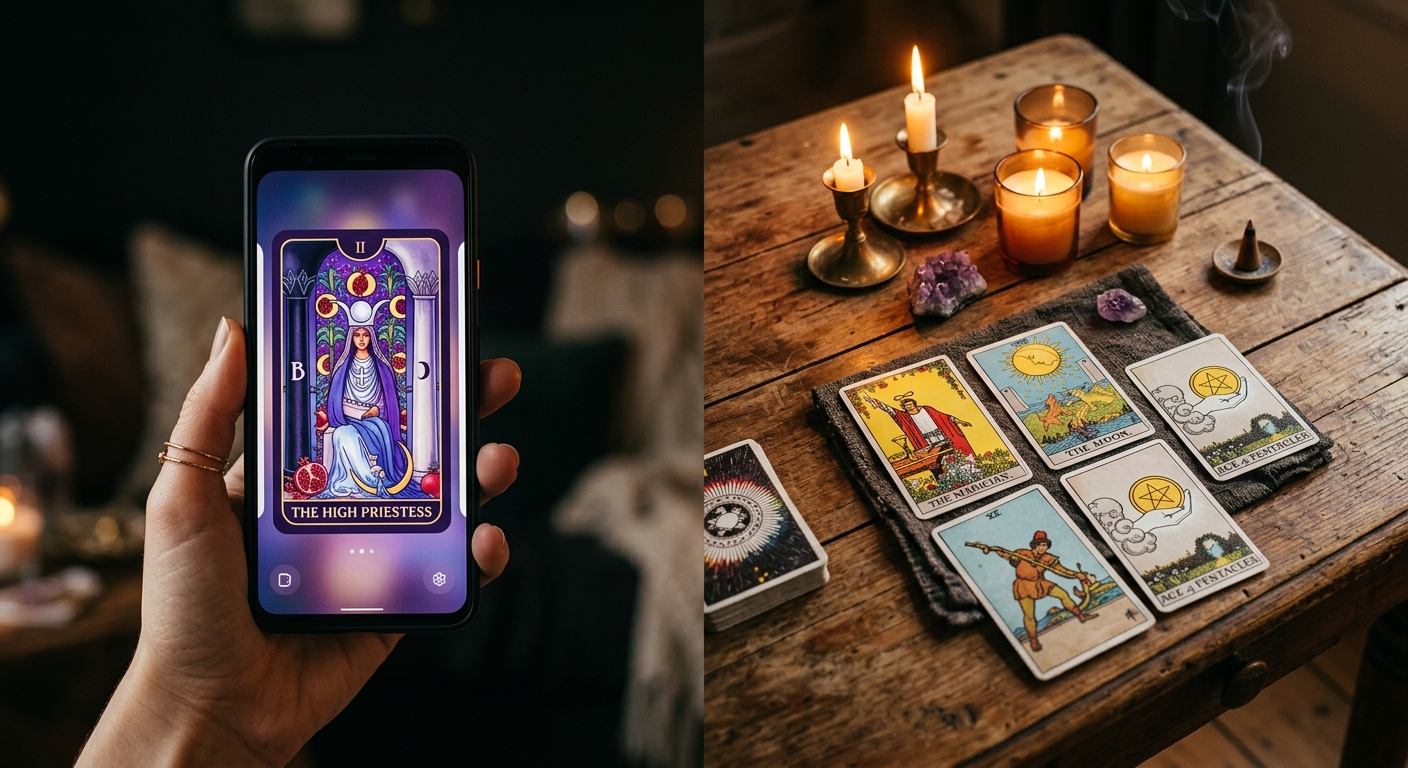
Traditional tarot readings involve sitting across from a human reader who shuffles physical cards, interprets their meanings, and channels intuitive insights based on years of study and practice. These intimate sessions create a tangible connection between seeker and reader, often in atmospheric settings filled with candles, crystals, and mystical energy.
In contrast, online AI-powered tarot experiences leverage sophisticated algorithms trained on centuries of tarot wisdom to deliver immediate readings through smartphones, tablets, or computers. These platforms analyze card combinations and provide detailed interpretations without requiring appointments or travel.
The debate of online tarot vs traditional reading has become increasingly relevant as more seekers explore both options. This guide examines both approaches through four essential lenses: accuracy and interpretation depth, convenience and accessibility, personal connection and energy, and cost considerations. Understanding these factors in the online tarot vs traditional reading comparison will help you determine which reading style aligns with your spiritual needs, lifestyle, and budget.
Accuracy and Authenticity: How Do They Compare?
The accuracy debate between online and traditional tarot readings centers on a fundamental question: can algorithms match human intuition?
AI Tarot Technology operates through sophisticated databases containing traditional card meanings, symbolism, and interpretive frameworks. These systems analyze card combinations using pattern recognition and contextual algorithms, delivering consistent interpretations based on established tarot principles. AI-powered tarot platforms eliminate variability in basic card knowledge, ensuring every reading draws from comprehensive symbolic databases.
Human Reader Variability introduces both strengths and challenges. Experienced readers bring decades of study, intuitive gifts, and energetic sensitivity that no algorithm can replicate. However, skill levels vary dramatically—from novice readers still learning card meanings to seasoned practitioners with deep spiritual connections. A reading's quality depends heavily on the individual reader's training, experience, and intuitive development.
The Spiritual Connection Factor remains the crucial differentiator. Traditional readers often establish energetic rapport with clients, reading subtle cues and channeling intuitive insights beyond card meanings. AI provides objective, unbiased interpretations without emotional projection, while human readers offer personalized spiritual guidance shaped by their unique perceptual abilities.
Ultimately, accuracy depends less on the medium and more on what seekers value: consistency and accessibility versus personalized intuitive connection.
Convenience and Accessibility Advantages
The most striking difference between online tarot and traditional readings lies in accessibility. Online platforms like Tarot Reader offer 24/7 availability, eliminating the constraints of business hours and appointment scheduling. Whether you're seeking guidance at 3 AM during a sleepless night or during your lunch break, digital readings are instantly accessible.
Geographic limitations vanish with online options. Traditional readings require finding a reputable practitioner within driving distance, which can be challenging in rural areas or regions with limited metaphysical communities. Online platforms connect you with diverse reading styles and interpretations regardless of your location.
For beginners, digital interfaces provide a low-pressure introduction to tarot. The privacy of exploring cards from home removes the intimidation factor some experience when visiting an unfamiliar reader's space. Traditional sessions, while offering personal connection, can feel overwhelming for newcomers uncertain about etiquette or what to expect.
However, this convenience comes with trade-offs worth considering as you determine which format aligns with your spiritual practice and personal preferences.
Personal Connection and Spiritual Energy
The energetic exchange between reader and seeker forms the foundation of any tarot reading, yet this dynamic manifests differently across formats.
Traditional in-person readings allow practitioners to observe subtle body language, facial expressions, and energy shifts that inform their interpretations. A skilled reader notices when a client's shoulders tense at certain revelations or when their eyes light up with recognition. This human empathy creates a reciprocal flow where the reader adjusts their delivery based on real-time emotional cues, deepening the spiritual resonance of the session.
Online readings eliminate physical presence, which some argue diminishes the energetic connection. Without sharing the same physical space, readers cannot sense the client's aura or respond to unspoken emotional signals. However, many practitioners report that digital formats like AI-powered tarot readings remove performance anxiety, allowing seekers to engage more authentically.
The privacy advantage of online sessions shouldn't be underestimated. Many people feel more spiritually open when exploring vulnerable questions from their own sacred space, free from the self-consciousness that face-to-face encounters can trigger. This comfort may actually enhance the reading's effectiveness for introspective individuals.
Cost Comparison and Value Assessment
Understanding the financial commitment for tarot readings helps you make informed decisions about which approach fits your lifestyle and budget.
Traditional in-person readings typically range from $50 to $200 per session, with experienced readers charging premium rates of $150-$300 for hour-long consultations. Celebrity or renowned psychics may command $500 or more. These sessions usually last 30-60 minutes, and you'll need to factor in travel costs, parking fees, and time investment for each appointment.
Online AI platforms like Tarot Reader offer dramatically different pricing structures. Many provide free basic readings with unlimited access, while premium subscriptions range from $10-$30 monthly for enhanced features and detailed interpretations. This model allows unlimited readings without per-session charges, making them ideal for frequent users or those exploring tarot regularly.
The value proposition shifts based on usage frequency. If you seek guidance weekly, online platforms deliver superior cost efficiency. Traditional readings offer personalized human connection worth the premium for milestone decisions or occasional spiritual consultations. Consider your consultation frequency and budget constraints when evaluating which investment aligns with your needs.
Choosing the Right Option for Your Needs
Selecting between online tarot and traditional readings depends on your specific circumstances and goals. Understanding when each format excels helps you make the most informed choice.
When Online Tarot Works Best
Online readings shine for quick guidance during daily decision-making, offering immediate insights when you need clarity on the spot. Budget-conscious seekers appreciate the lower cost, with many platforms like Tarot Reader providing free or affordable options. Privacy is another significant advantage—you can explore sensitive questions without face-to-face interaction, perfect for those uncomfortable discussing personal matters in person.
When Traditional Readings Excel
In-person sessions are ideal for deep spiritual work requiring sustained energetic connection. Complex life situations involving multiple layers benefit from a reader's ability to observe your body language and adjust their approach. Many seekers value traditional readings for energetic healing elements that physical presence facilitates.
The Hybrid Approach
Savvy tarot enthusiasts often use both methods complementarily. Try online readings for daily guidance and quick check-ins, while reserving traditional sessions for major life transitions or quarterly deep dives. This balanced approach maximizes both convenience and depth.
Conclusion
The choice between online tarot vs traditional reading ultimately comes down to your personal preferences, lifestyle, and spiritual journey. Both methods offer authentic pathways to self-discovery and meaningful guidance—neither is inherently superior to the other.
Traditional readings excel in creating intimate, human connections and ritualistic experiences that many find irreplaceable. The physical presence of a reader, the tactile sensation of shuffling cards, and the dedicated sacred space contribute to a deeply immersive experience. However, they require scheduling, travel, and typically higher costs.
Online tarot provides unmatched convenience, accessibility, and affordability. Platforms like Tarot Reader make spiritual exploration available 24/7, perfect for spontaneous questions or regular practice without geographical or financial barriers. The privacy and immediate access appeal to modern seekers who value flexibility.
Consider trying both approaches to discover what resonates with your intuition. Start with online tarot as an accessible entry point—it's cost-effective and commitment-free. You might find that different situations call for different methods, or that one format consistently speaks to you more clearly. Your spiritual path is uniquely yours to explore.