Introduction
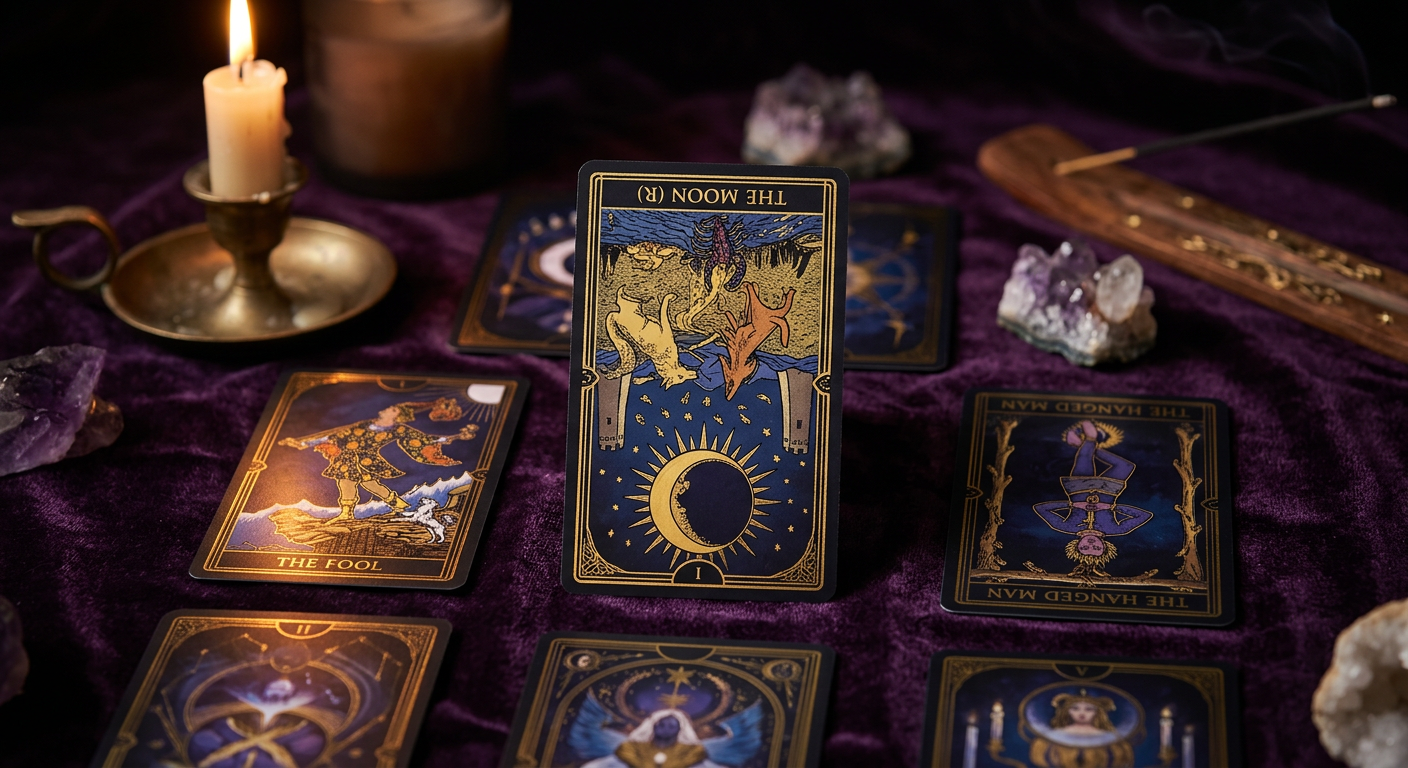
You're shuffling your tarot deck, asking a question that's been weighing on your mind, when suddenly a card falls to the table—upside down. Your heart skips a beat. Does this change everything? Should you flip it right-side up, or does the reversed position hold special meaning? If you've experienced this moment of confusion, you're not alone. Most tarot enthusiasts encounter reversed cards and wonder whether they're receiving a warning, a blockage, or something else entirely.
Understanding reversed tarot cards meanings transforms confusion into clarity. Rather than viewing reversals as negative omens or complications, they offer nuanced layers of insight that upright cards alone cannot provide. Reversed cards reveal hidden influences, internal conflicts, and alternative perspectives that deepen the accuracy of your readings. They're not something to fear—they're powerful tools for accessing the full spectrum of tarot wisdom.
This guide presents five proven interpretation methods for reversed cards, from traditional opposite meanings to intuitive energy-flow techniques. Whether you're consulting a Tarot Reader online for professional guidance on mastering reversals or practicing with physical decks at home, you'll discover how each approach unlocks different dimensions of understanding, helping you read reversals with confidence and precision.
1. The Blocked Energy Interpretation Method
Many experienced practitioners and platforms like Tarot Reader favor the blocked energy method because it recognizes the inherent potential within every card, regardless of its orientation. This interpretive approach, commonly taught by seasoned Tarot Readers, treats reversed tarot cards as indicators of potential that hasn't yet manifested rather than inherently negative omens. This method recognizes that energy exists on a spectrum—when upright, it flows freely; when reversed, something obstructs or delays its natural expression.
Blocked energy represents resistance, whether internal (fear, doubt, self-sabotage) or external (circumstances, timing, other people). To identify blockages during readings, ask: "What's preventing this energy from flowing?" or "Where am I resisting this card's natural expression?"
Practical Examples:
The Empress reversed signals blocked creativity or nurturing capacity. Perhaps you're postponing a creative project due to perfectionism, or struggling to care for yourself while caring for others. The creative potential exists—it's simply dammed up.
Ace of Cups reversed indicates emotional resistance or unexpressed feelings. You might be guarding your heart after past hurt, preventing new love or connection from entering. The cup is full, but you're holding it upside down, refusing to receive.
This method works best when clients feel stuck or recognize patterns of self-sabotage in their lives.
2. The Opposite or Shadow Meaning Approach
The opposite meaning method interprets reversed tarot cards as the inverse of their upright significance. When The Sun appears reversed, instead of representing pure joy and success, it suggests temporary clouding of optimism—perhaps delayed happiness or diminished confidence rather than complete despair.
This approach works effectively with cards that have clear polarities. The Tower reversed might indicate avoiding necessary change rather than experiencing sudden upheaval, while The Hermit reversed could signal excessive isolation transforming into loneliness rather than productive solitude.
However, this method has notable limitations. Simply flipping meanings often oversimplifies the card's message. Strength reversed doesn't always mean weakness—it might indicate inner strength being directed inward or self-doubt masking courage.
The shadow work dimension offers deeper psychological insight. Reversed cards can reveal unconscious patterns, repressed emotions, or aspects of ourselves we avoid confronting. The Empress reversed might expose neglected self-care rather than simply indicating lack of abundance.
This traditional approach serves best when combined with intuition and context, particularly when exploring the hidden psychological dimensions that free online tarot readings can help illuminate through consistent practice.
3. The Intensified or Diminished Energy Method
The Intensified or Diminished Energy Method treats reversals as volume controls for a card's core meaning. Rather than completely changing the interpretation, this approach views reversed cards as either amplifying or softening the upright energy.
Understanding Intensification
When a reversal intensifies energy, it magnifies the card's inherent qualities. The Tower reversed might indicate an even more catastrophic upheaval than its upright counterpart—a complete life demolition rather than a single dramatic change. The Five of Pentacles reversed could represent extreme financial hardship or profound isolation beyond the upright's struggle.
Recognizing Diminishment
Conversely, diminished reversals soften the card's impact. The Three of Swords reversed often signals healing from heartbreak or lessening grief. The Ten of Swords reversed might indicate recovery from betrayal rather than the devastating blow of its upright position.
Determining Energy Direction
Context determines which interpretation applies. Examine surrounding cards—supportive cards suggest diminishment and healing, while challenging cards indicate intensification. Your intuitive response and the querent's situation provide essential clues. Practice with free AI tarot readings helps develop this interpretive skill through repeated exposure to different card combinations.
4. The Internal Versus External Focus Technique
The Internal Versus External Focus Technique offers a powerful lens for understanding reversed tarot cards meanings by distinguishing between outer circumstances and inner experiences. When upright, cards represent external events, visible actions, and public manifestations. Reversed, they shift to internal processes, hidden emotions, and private struggles.
Consider Justice reversed: while upright Justice shows courtroom decisions or public fairness, reversed it reveals internal moral conflict—wrestling with your conscience, questioning your own integrity, or struggling with self-judgment. The scales tip inward rather than outward.
This method works beautifully across all suits. The Three of Swords upright depicts external heartbreak or betrayal, while reversed it indicates internal healing or private grief you're processing alone. The Emperor upright represents external authority figures, but reversed points to internal control issues or your personal relationship with discipline.
This interpretation proves most valuable when querants face situations where their inner experience differs dramatically from external appearances—perfect for exploring authentic feelings versus social masks, or when someone needs permission to acknowledge their private truth.
5. The Personalized Intuitive Approach
The most powerful method for understanding reversed tarot cards meanings comes from developing your own interpretive system. While traditional meanings provide a foundation, your personal connection with the cards creates deeper insights that resonate authentically with your readings.
Begin by trusting your immediate impressions when a reversed card appears. Notice which emotions, images, or thoughts arise before consulting guidebooks. These spontaneous reactions often reveal the most relevant message for your specific situation.
Maintain a reversal journal to document patterns over time. Record the card, its position, your initial interpretation, and the reading's outcome. After several months, you'll discover consistent themes unique to your practice—perhaps reversed Cups consistently signal emotional avoidance while reversed Swords indicate communication delays.
The beauty of this approach lies in flexibility. Blend multiple methods based on context: use blocked energy interpretations for personal growth questions, shadow meanings for psychological inquiries, and opposing forces for relationship readings. Free AI tarot reading tools can help you explore different interpretive angles while developing your personal system, offering fresh perspectives that complement your intuitive development.
Conclusion
Understanding reversed tarot cards meanings opens up a richer, more nuanced dimension to your readings. Each of the five methods we've explored—blocked energy, opposite meanings, intensified energy, internal versus external focus, and timing delays—offers unique strengths for different reading situations. The blocked energy approach excels when addressing obstacles, while opposite meanings provide quick clarity for beginners. Intensified interpretations work beautifully for emotional readings, the internal-external method deepens psychological insights, and timing considerations add practical dimension to predictive work.
There's no single "correct" way to interpret reversals. The most skilled readers develop fluency by experimenting with multiple approaches and discovering which methods resonate with their intuitive style. Start by practicing one method consistently, then gradually incorporate others as you build confidence.
Ready to practice interpreting reversals with real-time guidance? Try our AI-powered tarot readings to explore how different reversal methods apply to your questions. Each reading provides detailed interpretations that help you develop your own reversal fluency through hands-on experience.