Introduction
The tarot deck has journeyed far from its 15th-century origins as a card game to become a sophisticated framework for psychological introspection. While popular culture often portrays tarot as mystical fortune-telling, modern practitioners increasingly recognize it as a structured self-reflection tool that facilitates meaningful personal growth through symbolic interpretation. Contemporary platforms like Tarot Reader exemplify this shift, providing accessible frameworks that emphasize the psychological approach to tarot rather than supernatural predictions.
Skepticism about tarot is understandable—and actually healthy. Rather than claiming supernatural powers, contemporary tarot reading for personal growth operates as a psychological mirror. The 78 archetypal images act as prompts that help you access unconscious thoughts, examine patterns in your behavior, and explore different perspectives on challenges you're facing. Think of it as guided meditation with visual cues.
This guide will show you how tarot facilitates genuine self-awareness through three core practices: interpreting symbolic meanings that resonate with your current situation, maintaining a reflective journaling practice, and asking better questions about your life's direction. Whether you're exploring free online tarot reading or working with physical cards, you'll discover how this ancient system becomes a powerful catalyst for understanding yourself more deeply.
The Psychological Benefits of Tarot for Self-Reflection
Tarot functions as a psychological mirror, reflecting subconscious thoughts and emotions through archetypal imagery. When you draw a card, your interpretation reveals more about your inner landscape than any predetermined meaning ever could.
Carl Jung identified archetypes as universal symbols residing in the collective unconscious. Tarot's Major Arcana embodies these archetypes—The Fool represents new beginnings, The Tower symbolizes sudden transformation, and Death signifies necessary endings. These images resonate across cultures because they tap into fundamental human experiences that transcend individual backgrounds.
The psychological mechanism of projection explains tarot's effectiveness. As you interpret symbolic cards, you unconsciously project your hidden beliefs, fears, and desires onto neutral imagery. A card depicting conflict might trigger awareness of an unresolved relationship issue, while one showing abundance could reveal limiting beliefs about worthiness.
Tarot creates structured space for mindfulness by requiring focused attention on specific questions and deliberate interpretation. Unlike scattered worry, a tarot reading demands intentional self-examination, bypassing rational defenses that typically guard uncomfortable truths. Resources like Tarot Reader provide this focused, intentional reading experience designed specifically for personal growth, offering a dedicated environment where you can engage in meaningful self-reflection without distractions. This structured reflection transforms vague anxiety into concrete insights, making abstract emotions tangible and addressable.
Essential Tarot Spreads for Personal Development
Tarot spreads serve as frameworks for exploring your inner landscape and catalyzing meaningful self-reflection. These structured layouts transform card readings into powerful tools for personal growth.
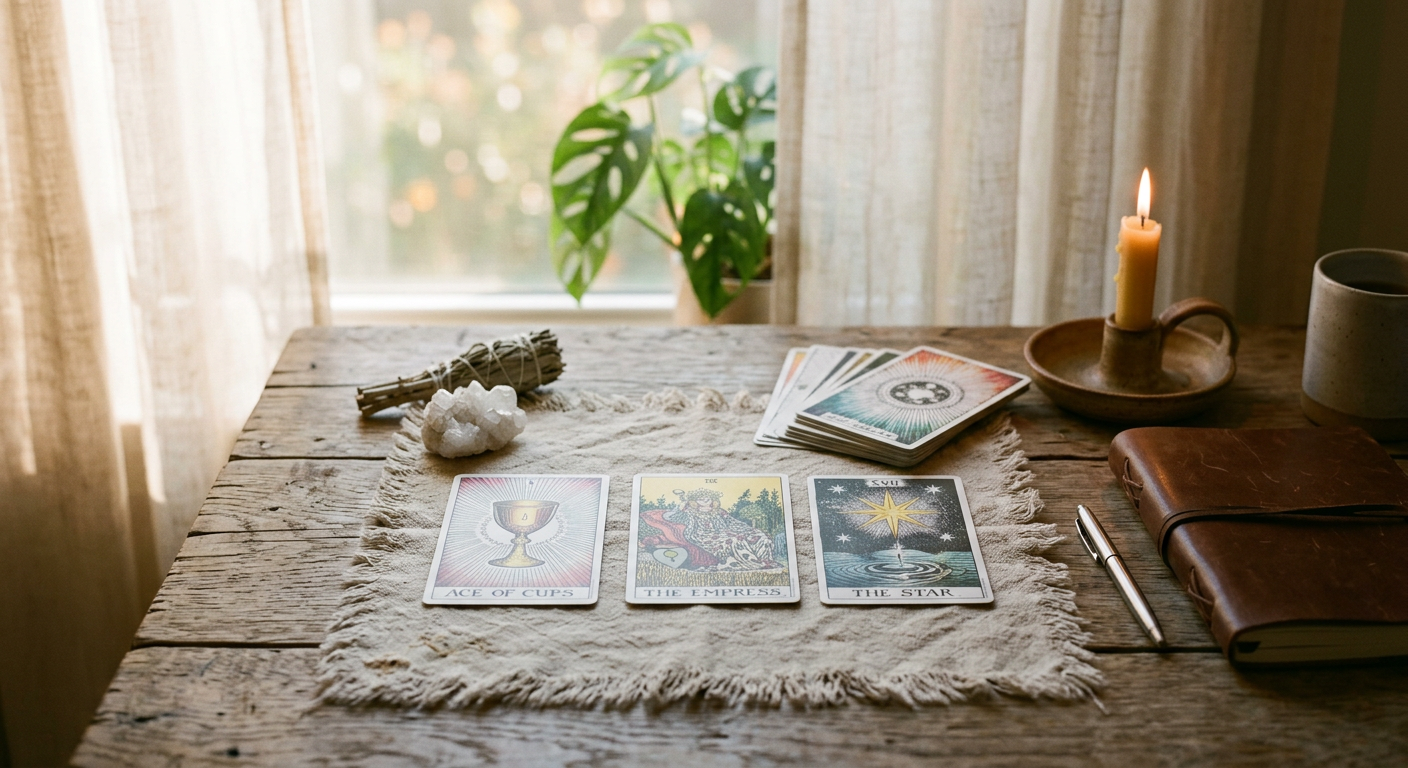
The Three-Card Spread offers elegant simplicity for pattern recognition. Position cards representing past influences, present circumstances, and emerging future trends. This layout reveals how previous experiences shape current behaviors and potential outcomes, helping you identify recurring themes in your decision-making.
The Celtic Cross adaptation deepens exploration of specific challenges. Modify the traditional ten-card spread by focusing positions on internal factors: your conscious approach, subconscious influences, strengths to leverage, and lessons to integrate. This configuration transforms fortune-telling into psychological inquiry.
A Custom Self-Awareness Spread uses five positions: core strengths, hidden talents, blind spots, growth edges, and integration practices. Draw one card for each position, journaling about how the imagery resonates with your current development journey. This personalized spread format encourages honest self-assessment while highlighting actionable growth opportunities.
Interpreting Major Arcana as Personal Growth Archetypes
The 22 Major Arcana cards represent universal archetypes of human experience, forming a symbolic map of psychological and spiritual development. Rather than viewing these cards as predictive tools, approach them as mirrors reflecting your inner journey and potential paths forward.
The Fool's Journey serves as the central narrative framework, beginning with innocent potential (The Fool) and progressing through life's essential lessons toward wholeness (The World). Each card represents a developmental stage you may encounter—from establishing personal authority (The Emperor) to surrendering control (The Hanged Man).
Transformation catalysts like The Tower, Death, and The Devil signal necessary breakdowns before breakthroughs. The Tower represents sudden disruption that clears outdated structures, while Death symbolizes profound endings that create space for renewal. The Devil highlights attachments and patterns requiring conscious release.
Resource cards such as The Star, Strength, and Temperance point toward inner capacities. The Star offers hope and renewed vision after hardship, Strength reveals courage through compassion, and Temperance teaches integration and balance—essential skills for sustainable personal growth.
Integrating Tarot with Journaling and Daily Practice
Building a sustainable tarot practice requires consistent integration into your daily routine. The most accessible entry point is the daily single-card pull, performed each morning with a simple question: "What energy should I embrace today?" Document the card, your immediate reaction, and revisit your entry each evening to note how the message manifested throughout your day.
For deeper pattern recognition, establish a weekly reflection spread every Sunday evening. A three-card spread examining past week, present state, and coming week creates a visual timeline of your emotional landscape. Track recurring cards and suits in your journal—repeated Cups may signal emotional processing needs, while persistent Swords could indicate mental overwhelm requiring attention.
Enhance your practice by combining tarot with meditation. After drawing your card, spend five minutes in silent contemplation, allowing the imagery to speak without intellectual analysis. Follow with therapeutic writing techniques like stream-of-consciousness journaling or dialogue writing where you converse with the card's archetype. Try one card draw readings for focused daily guidance that complements your journaling practice perfectly.
Addressing Misconceptions and Starting Your Tarot Journey
Tarot doesn't require psychic powers or supernatural beliefs. It functions as a psychological mirror, using archetypal imagery to prompt introspection and reveal patterns in your thinking. The cards themselves don't predict futures—they facilitate deeper self-awareness through structured reflection.
While tarot isn't scientifically "valid" as a predictive tool, research supports its therapeutic benefits. The practice encourages mindfulness, narrative therapy, and cognitive reframing—all evidence-based psychological techniques. Your interpretations matter more than mystical forces.
Getting Started Confidently:
Choose a deck with imagery that resonates emotionally. The classic Rider-Waite-Smith remains beginner-friendly, but explore options until you find visual symbolism that speaks to you.
Learn one card daily. Study its imagery, traditional meanings, and your personal reactions. Journal your observations without pressure for "correct" interpretations.
Establish a simple routine. Try a one-card daily draw each morning, asking "What energy should I focus on today?" Consistency builds familiarity faster than intensive study sessions.
Expect gradual insights, not instant revelations. Tarot for personal growth rewards patient practice with deepening self-understanding over time.
Conclusion
Tarot reading for personal growth offers a powerful, structured framework for self-reflection that's accessible to everyone, regardless of spiritual beliefs or experience level. Throughout this guide, you've discovered how the archetypal imagery and symbolic language of tarot cards create meaningful pathways to explore your subconscious patterns, clarify decisions, and cultivate deeper self-awareness.
The true transformative power of tarot emerges through consistent practice and dedicated journaling. By documenting your readings, tracking recurring themes, and reflecting on how interpretations resonate with your lived experiences, you build a personalized system for understanding your inner landscape. Each reading becomes a conversation with yourself—revealing blind spots, highlighting strengths, and illuminating possibilities you might otherwise overlook.
Whether you're navigating a major life transition, seeking clarity on relationships, or simply curious about your personal development journey, tarot provides a non-judgmental space for honest self-inquiry. Ready to begin your self-discovery journey? Experience a free AI-powered tarot reading today and unlock immediate insights into your personal growth path with openness and curiosity.