Introduction
The Celtic Cross stands as the gold standard of tarot spreads, recognized and practiced by readers across every continent. If you've ever wondered what is a Celtic Cross tarot spread, you're exploring the most comprehensive divination tool in the tarot tradition—an iconic 10-card layout that has earned its reputation over more than a century, offering unparalleled depth whether you're exploring relationship dynamics, career crossroads, or spiritual growth.
Unlike simpler three-card spreads, the Celtic Cross weaves together past influences, present circumstances, hidden obstacles, and future potentials into a cohesive narrative. Each of the ten positions serves a specific purpose—from revealing your immediate challenges to uncovering subconscious fears and highlighting the final outcome. This multilayered structure makes it remarkably versatile, adapting seamlessly to any question type while maintaining consistent interpretive power. For those asking what is a Celtic Cross tarot spread and how to master it, platforms like Tarot Reader have made practicing more accessible, offering AI-powered tarot insights that help both beginners and experienced readers explore this format with confidence.
Throughout this guide, you'll discover how to properly lay out the Celtic Cross, interpret each card position with confidence, and synthesize the entire spread into meaningful guidance. Whether you're a curious beginner or seeking to refine your reading skills, mastering this timeless spread will transform your divination practice.
1. The 10 Positions of the Celtic Cross Spread
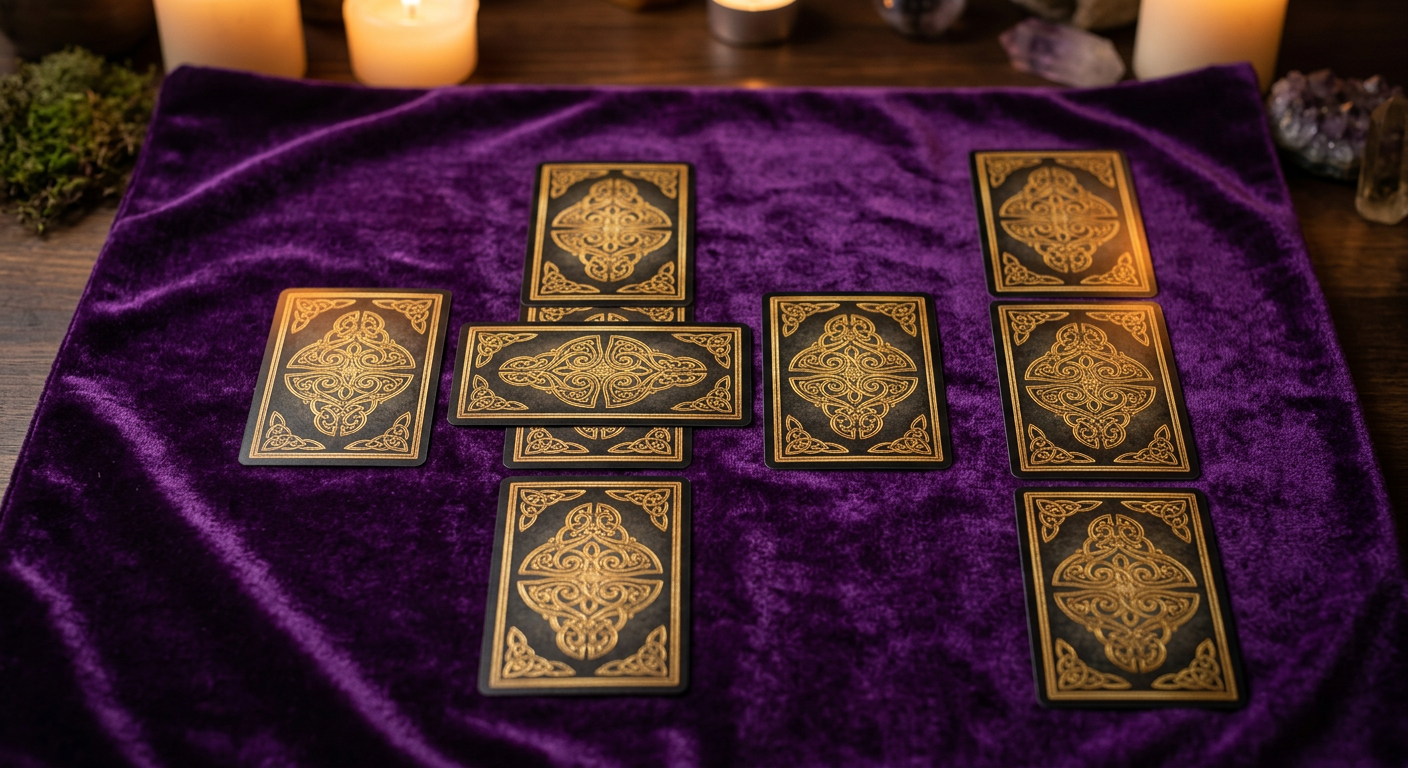
The Celtic Cross spread uses ten cards arranged in two distinct formations that work together to provide comprehensive insight into any question or situation.
The Cross Formation (Positions 1-6):
Position 1 (Present Situation) represents your current circumstances and the heart of your question. Position 2 (Challenge/Crossing Card) lays horizontally across it, revealing immediate obstacles or influences affecting the situation.
Surrounding these core cards, Position 3 (Past) shows foundation events that led to now, while Position 4 (Near Future) indicates what's approaching within weeks or months. Position 5 (Above/Conscious) reveals your conscious thoughts and goals, and Position 6 (Below/Subconscious) uncovers hidden motivations or unconscious influences.
The Staff Formation (Positions 7-10):
Position 7 (Self) reflects your attitude and role in the situation. Position 8 (Environment) shows external influences from people and circumstances around you. Position 9 (Hopes/Fears) reveals your deepest aspirations or anxieties about the outcome. Position 10 (Outcome) synthesizes all previous cards to show the likely resolution—this final position requires careful consideration of how all nine preceding cards interact and influence each other. Tools like Tarot Reader help readers synthesize these complex interactions by highlighting connections between positions and suggesting how the cards' energies combine to form the complete narrative.
Try a Celtic Cross reading to experience how these positions interact.
2. Step-by-Step Process to Lay Out the Cards
Preparation and Setting Intention
Begin by finding a quiet space where you won't be interrupted. Clear your reading surface and hold your tarot deck while formulating your question. Shuffle the cards thoroughly while maintaining focus on your inquiry—this intentional shuffling connects your energy with the deck and helps clarify your purpose.
The Cross Formation (Positions 1-6)
Start by placing Card 1 in the center, representing the present situation. Lay Card 2 horizontally across it, symbolizing the challenge or opposing force. Position Card 3 directly above the crossed cards (the conscious influences), then Card 4 below (the foundation). Place Card 5 to the left (recent past) and Card 6 to the right (near future), completing the cross pattern.
The Staff Column (Positions 7-10)
To the right of the cross, create a vertical line ascending upward. Position Card 7 at the bottom (your attitude), Card 8 above it (external influences), Card 9 next (hopes and fears), and finally Card 10 at the top (the outcome). This staff provides deeper psychological and situational context to your reading.
3. How to Interpret Cards in Context
Understanding how position transforms card meaning is essential for accurate Celtic Cross readings. The same card carries dramatically different messages depending on where it lands.
Position-Driven Interpretation Examples
The Tower in position 3 (subconscious influences) suggests hidden anxiety about sudden change, while the same card in position 9 (hopes and fears) indicates conscious worry about upheaval. Position 6 (near future) makes it a warning of impending disruption, but in position 10 (final outcome), it represents necessary transformation.
Reading Card Relationships
Adjacent cards create dialogue. If The Lovers appears in position 1 (present situation) with The Hermit in position 2 (challenge), the reading suggests isolation conflicts with partnership needs. The crossing card always modifies the central card's energy—supportive cards ease challenges, while opposing cards intensify them.
Handling Reversed Cards
Many readers use reversals in Celtic Cross spreads to indicate blocked energy, delays, or internalized meanings. However, beginners often find reading all upright cards initially helps build confidence. The positional meanings already provide sufficient nuance without adding reversal complexity.
4. When to Use Celtic Cross Versus Other Spreads
The Celtic Cross shines when you're facing complex, multilayered questions that require deep exploration. Use this spread for major life decisions like career changes, relationship commitments, or significant financial choices where you need to understand underlying influences, obstacles, and potential outcomes simultaneously.
Reserve the 20-30 minute Celtic Cross for situations demanding comprehensive analysis. A single-card draw works perfectly for daily guidance or yes/no clarity, taking just 2-3 minutes. The three-card Past-Present-Future spread offers quick insight into timeline-based questions in under 10 minutes, ideal for understanding how situations evolved.
Choose simpler spreads when you're seeking straightforward answers or have limited time. If your question is "Should I accept this job offer?" a three-card spread provides sufficient direction. However, if you're asking "How can I navigate this career transition while maintaining work-life balance?" the Celtic Cross delivers the nuanced perspective you need.
The information depth differs dramatically—while a three-card spread gives you a narrative arc, the Celtic Cross reveals hidden influences, subconscious factors, external perceptions, and multiple outcome possibilities that shorter spreads cannot capture.
5. Practical Tips for Beginners
Starting with the Celtic Cross can feel overwhelming, but strategic practice builds confidence quickly. Begin by reading past situations where you already know the outcome—this allows you to validate your interpretations against reality and understand how the cards speak to you personally.
Keep a printed reference sheet of the ten position meanings visible during your first dozen readings. This eliminates the mental burden of memorizing while you focus on card interpretation. Many readers laminate a simple chart showing each position's significance for easy reference.
Journaling transforms your practice from guesswork into skill development. Record each reading with the question asked, cards drawn, your initial interpretation, and later the actual outcome. After three months, patterns in your accuracy emerge, revealing which positions you naturally understand and which need more attention.
If you're looking for structured practice without the pressure of shuffling physical cards, try a Celtic Cross reading to familiarize yourself with the spread's flow before investing in a deck. Digital tools provide immediate position reminders while you're still learning the framework.
Conclusion
The Celtic Cross tarot spread stands as one of the most comprehensive and insightful divination tools available to both beginners and experienced readers. Its ten-card structure provides unmatched depth for exploring complex questions, revealing intricate connections between your past experiences, present circumstances, and future possibilities. While the spread may seem intimidating at first, mastery comes through consistent practice and patience with the layered interpretation process.
Each position in the Celtic Cross serves a specific purpose, working together to create a complete narrative that addresses not just surface-level concerns but the underlying energies, obstacles, and potentials surrounding your situation. The spread's versatility makes it ideal for life-changing decisions, relationship dynamics, career crossroads, and spiritual development questions that require thorough examination.
Ready to experience the Celtic Cross for yourself? Try a free Celtic Cross reading and discover the profound insights this timeless spread can offer. The more you work with this powerful layout, the more intuitive and revealing your readings will become.